
Around Italy: Montepulciano | Tuscan Hill Town, Wine and Renaissance Stone
Updated: Aug 30
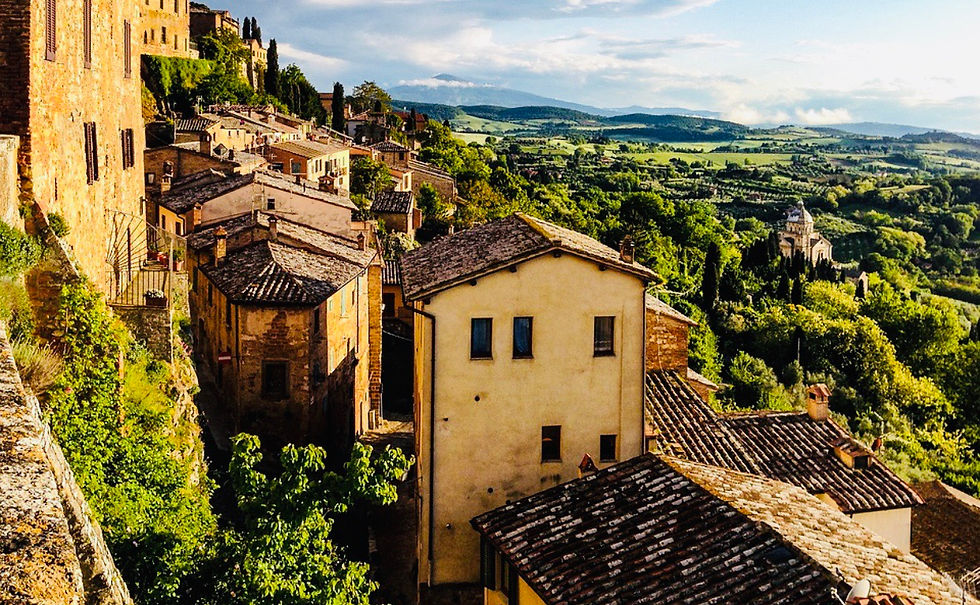
Having only just left the town, we are both desperate to return. Montepulciano is a charming medieval town in the Italian province of Siena in southern Tuscany, Italy. It’s just hard not to fall in love with it.

Montepulciano is established for its elegant Renaissance buildings, charming squares, and ancient churches, but is especially renowned for the “Vino Nobile” Montepulciano wines. Vino Nobile di Montepulciano high-level vintage is made from Tuscan Sangiovese grapes, and there are plenty of wineries where you can sample it.

Our trip continues with delicious dinner and a historical tour at Fattoria Pulcino with chef Stefano. The chef is very passionate about Italian cuisine and the history of his place and family. Fattoria Pulcino is an ancient frateria/farmhouse since the 16th century.

The restaurant organizes cooking classes, where you can learn how to prepare traditional Tuscan dishes, homemade bread, pasta, and handmade desserts. Pulcino farm produces wine, olive oil, cured meats, cheeses and all varieties of jam.

The atmosphere in here is magical. Even more magical is the food. Eating here means making an exploration of the most authentic heart of Tuscany. First of all, the legendary Florentine steak. You can never go wrong with Fiorentina steak!

The restaurant is a really welcoming place. I think we met the whole family! Friendly owners and great food in a nice relaxing setting - can't fault this place.

You will leave this place with a lot of good products, a full stomach, great memories, and amazing experience.
Montepulciano is a medieval town of rare beauty highly recommended visiting in Tuscany. This is definitely the place that stole my heart.
#florentinesteak #montepulcianoitaly #beeffiorentina #italianfiorentinasteak #Montepulciano #sangiovese
Sponsored by
Why Montepulciano Deserves More Than a Quick Stop
Montepulciano is one of Tuscany’s most recognizable hill towns, but its value goes far beyond a panoramic photograph. Built along a ridge in southern Tuscany, the town rewards a slow uphill walk through stone streets, Renaissance palaces, churches, workshops, wine cellars and viewpoints over the Val d’Orcia and Val di Chiana. The physical climb is part of the experience. Each level of the town reveals a different relationship between architecture and landscape, culminating around Piazza Grande. Visitors who arrive only for an hour often see the monuments but miss the rhythm that makes Montepulciano memorable.
Vino Nobile and the Landscape
Wine is essential to the identity of Montepulciano. Vino Nobile di Montepulciano is based primarily on Sangiovese, locally known as Prugnolo Gentile, and the vineyards surrounding the town are part of a long agricultural tradition. Historic cellars in the center demonstrate how wine production was integrated directly into the urban fabric, while estates outside town reveal the broader landscape of vines, olive trees and cypress-lined roads. Tasting wine here makes more sense when it is connected to the land and to local food rather than treated as an isolated luxury experience.
Food of Southern Tuscany
The cuisine around Montepulciano is built for the landscape: pici, ragù, game, pecorino, beans, grilled meats, crostini, olive oil and seasonal vegetables. Pici are especially important because their thick handmade form represents the simplicity and physicality of Tuscan pasta traditions. Pairing them with garlic, breadcrumbs, meat sauce or local cheese shows how small variations reflect family and village habits. Local pecorino and cured meats are best understood as products of pastoral and rural systems rather than as generic antipasti.
Piazza Grande and the Historic Center
Piazza Grande is the architectural heart of Montepulciano, surrounded by civic and religious buildings that demonstrate the town’s Renaissance importance. Yet the route toward the square is just as important. Small lanes, steep passages and secondary piazzas provide a more intimate experience than the major monuments alone. Look into courtyards, visit churches, and allow time for the transitions between busy commercial streets and quiet residential corners. The town is at its best early in the morning and again in the evening, when day visitors have left.
How to Visit
Stay at least one night. Montepulciano is dramatically better after the buses depart and before they arrive the next morning. Combine the town with a winery visit, but avoid overloading a single day with multiple tastings. One serious visit followed by a long meal is more useful than racing between estates. A car is the most practical way to explore the surrounding countryside, although the historic center itself should be walked. Parking below the center means the visit naturally begins with a climb.
Montepulciano in a Wider Tuscan Itinerary
The town pairs naturally with Pienza, the Val d’Orcia, Montalcino, Chiusi and the thermal areas of southern Tuscany. A strong itinerary uses Montepulciano as one piece of a larger story about agriculture, Renaissance urbanism, wine and landscape. Two or three nights in the area allow enough time to understand those connections rather than simply collect towns.
Travel Rhythm and Season
Spring and autumn are ideal for walking and food-focused travel. Summer brings long evenings but also heat and heavier visitor numbers. Winter can be quiet and atmospheric, with a stronger emphasis on wine, hearty food and indoor cultural visits. Whenever you go, give the town time. Montepulciano is built vertically, historically and culturally; it cannot be understood from a parking lot viewpoint.
How to Read the Territory
Montepulciano becomes much easier to understand when geography is treated as the starting point rather than the background. The essential landscape is a ridge-top Renaissance town surrounded by the Val di Chiana and southern Tuscan wine country. Those physical conditions shaped where people settled, what they grew, how they moved, which foods were practical and which towns became centers of trade or political power. A useful Around Italy approach is to look for those connections continuously. When a road climbs, ask what that altitude changes. When vineyards appear, notice exposure and slope. When a market sells a specific cheese, fish or vegetable, connect it to the landscape that produced it. This method turns sightseeing into regional understanding. It also prevents the common mistake of treating Italian destinations as collections of monuments detached from everyday life. In Montepulciano, the built environment, agriculture, food and local habits are part of one system. The more carefully those relationships are observed, the more coherent the destination becomes.
Food, Wine and Regional Logic
The most useful way to eat in Montepulciano is to follow local logic rather than search for a generic list of “best dishes.” Start with the ingredients that make sense here: pici, ragù, pecorino, crostini, grilled meats, beans and olive oil. These foods are not random specialties; they reflect climate, preservation, farming, fishing, trade and household technique. The same principle applies to wine. Important local references include Vino Nobile di Montepulciano and Rosso di Montepulciano. A strong meal should allow regional products to support one another rather than competing for attention. Order fewer things, ask what is seasonal, and pay attention to texture and preparation. Avoid restaurants that offer the same long tourist menu regardless of place. In a serious regional kitchen, the menu should change when the territory changes. Markets, bakeries, wine shops and small food stores are equally important because they show what residents buy outside restaurant service. For travelers who want to understand Italian regional cuisine, those everyday places are often more educational than a formal tasting menu.
What to Do Without Rushing
A balanced itinerary in Montepulciano should combine major landmarks with ordinary local life. Core stops include Piazza Grande, historic cellars, the steep center, a winery, Pienza and the Val d’Orcia. Do not schedule them as a race. Build pauses into the day for walking, coffee, markets, viewpoints and meals. Italy’s regional identity is often visible in transitions between attractions: a residential street behind a famous square, a bakery opening in the morning, a farmer delivering produce, an evening passeggiata or a small church that is not on a top-ten list. These details are not filler. They are the evidence that a place is still lived in. A good rule is to choose one major cultural visit in the morning, one landscape or neighborhood experience in the afternoon and a long meal in the evening. That rhythm produces a clearer memory of the destination than five hours of continuous sightseeing.
A Three-Day Framework
For a three-day introduction, use the first day to understand the main urban or historic center and its immediate food culture. Walk before relying on transport, visit a market or specialist food shop, and have one traditional meal built around local ingredients. On the second day, move outward into the surrounding landscape: vineyard, coast, mountain, archaeological site or rural town depending on the geography of Montepulciano. This is where the relationship between city and territory becomes visible. On the third day, choose a contrasting experience rather than repeating the first two: a smaller village, a long walk, a second wine area, a museum focused on local history, or a coastal or alpine route. This three-part structure—center, territory, contrast—works because it prevents the trip from becoming one-dimensional. Travelers with more time should slow the same pattern down rather than simply adding more stops.
Travel Logistics That Actually Matter
The most practical way to move through this destination is walking in town and a car for the countryside. The best general travel period is spring and autumn, although the right season depends on whether the priority is food, walking, beaches, snow, wine harvest or cultural sites. Early morning and late afternoon are consistently valuable because streets are quieter, light is better and local rhythms are easier to observe. Avoid changing accommodation every night unless geography makes it unavoidable. A stable base gives time for repeat visits to the same café, bakery or neighborhood and reduces the amount of the trip spent packing and driving. Reservations matter for famous restaurants and popular wineries, but leave part of the schedule open. Regional Italy rewards flexibility because weather, market days, festivals and local recommendations can change the best plan.
What to Buy and What to Skip
Useful regional purchases are things that carry the territory home without turning the trip into souvenir shopping. In Montepulciano, look for Vino Nobile, pecorino, olive oil and handmade pasta. Buy from producers, specialist shops and markets when possible, and ask about origin rather than assuming that every product displayed in a tourist center is local. Skip generic packaging that could come from anywhere in Italy. The same discipline applies to wine: one bottle with a clear connection to a vineyard or meal is more meaningful than several labels chosen only for reputation. Food products should also be practical to transport and legal to bring to your destination country. The goal is not accumulation. It is to remember the place through something genuinely connected to its agriculture or craft tradition.
Common Travel Mistakes
The most common mistake in Montepulciano is trying to prove how much was seen. Rushed itineraries flatten regional differences and encourage visitors to eat at convenient places rather than good ones. Another mistake is assuming that famous equals representative. Major landmarks matter, but they rarely explain the full territory. Travelers also lose context when they separate food from history, or countryside from urban culture. Finally, do not judge local service, meal times or opening hours by American expectations. Italian regional travel works better when the visitor adapts to the place rather than demanding that the place adapt to the itinerary. Fewer transfers, fewer restaurant courses ordered at once, more walking and more attention to local timing usually produce a better trip.
Why This Belongs in Around Italy
Montepulciano deserves a place in Around Italy because it shows how strongly Italian identity is still organized by territory. Regional differences are not decorative folklore. They affect language, architecture, recipes, agriculture, wine, festivals and everyday habits. Understanding those differences is the entire point of traveling through Italy seriously. The destination becomes memorable when the reader can explain not only what was seen, but why the place looks, tastes and behaves the way it does. That is the standard for this guide: not a checklist, but a working understanding of the region.
A Full Day in Montepulciano
Begin early and walk uphill before the main visitor flow. Visit the historic center and Piazza Grande, then stop in one historic wine cellar rather than several. Lunch should include a local pasta such as pici and a glass of regional wine. In the afternoon, leave town for a vineyard or drive toward Pienza and the Val d’Orcia. Return for sunset and stay for dinner after day visitors leave.
Wine Without Tasting Fatigue
More tasting is not better tasting. Vino Nobile deserves attention to vintage, producer and food pairing, not rapid comparison of many glasses. One structured cellar visit followed by a bottle at dinner often teaches more than three appointments. The same principle protects driving safety and keeps the day from becoming a schedule of sales presentations.
Why Staying Overnight Changes the Town
Montepulciano becomes quieter and more local in the evening. Streets that feel crowded at midday regain their architectural scale, restaurants settle into a slower rhythm and morning offers a completely different experience. One night is enough to reveal why the town should not be treated only as a day-trip viewpoint.
What Montepulciano Teaches About Tuscan Travel
The town is a useful lesson in how to travel Tuscany properly. Famous places are not ruined by popularity; they are weakened when visitors give them too little time. Arriving early, staying overnight and connecting architecture with wine country restores context. The same method works elsewhere in Tuscany. Instead of racing between hill towns, choose fewer and understand the agriculture around them. Instead of tasting wine without food, connect the bottle to a meal. Instead of photographing a view and leaving, walk the streets that produced it. Montepulciano becomes more than a beautiful town when used as a model for slower regional travel.
A Two-Night Montepulciano Plan
Two nights create a completely different experience from a rushed day trip. On arrival afternoon, walk the lower streets slowly and have an early aperitivo without trying to reach every monument. Use the first evening for a traditional dinner and one bottle of local wine rather than a formal tasting. The next morning, climb to Piazza Grande before the busiest hours and visit a historic cellar. Leave town for lunch or a winery in the countryside, then spend the afternoon in Pienza or the Val d’Orcia before returning to Montepulciano. On the final morning, revisit the town without a schedule, buy pecorino or wine from a specialist shop and leave after coffee. This plan deliberately repeats the historic center at different times of day. That repetition is useful: the town changes with light, crowds and commercial activity, and the visitor begins to see it as a real place rather than one continuous sightseeing session.


Comments