
Italian Caprese Salad | Insalata Caprese
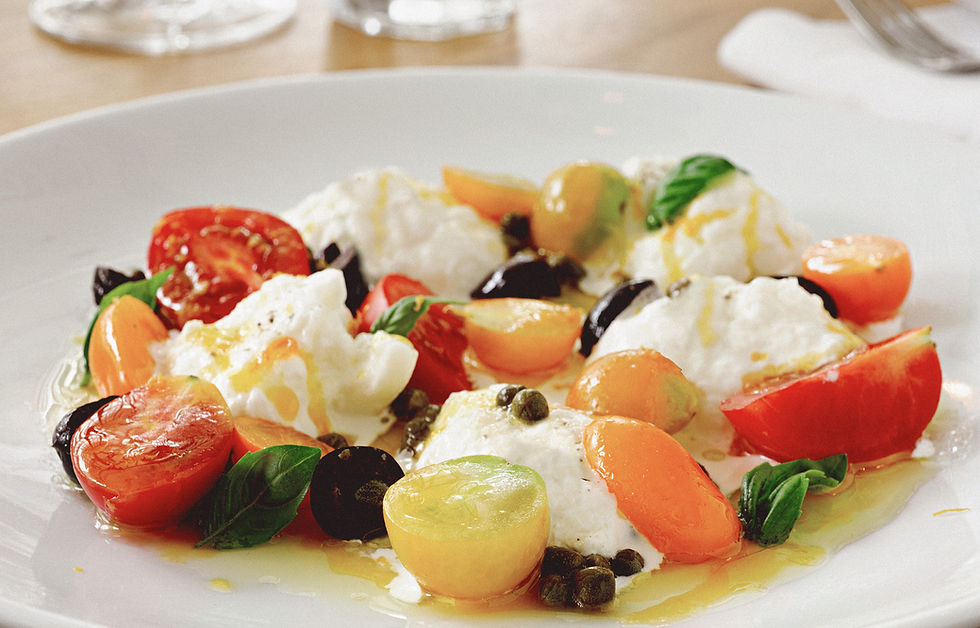
Insalata caprese is three ingredients and no cooking, which is exactly why it is difficult. Ripe tomato, fresh mozzarella, basil, good olive oil and salt: there is nowhere to hide a mediocre tomato, nothing to mask cold, rubbery cheese, and no sauce to rescue a plate assembled an hour too early. Everything the dish will ever be is decided at the market and in the last five minutes before it reaches the table.
What follows is the traditional Campanian version, with no lettuce, no dried oregano and no balsamic glaze. Just the correct ingredients, at the correct temperature, seasoned in the correct order, and served immediately.
Yield: 4 servings. Prep: 15 minutes. Cook: none. Rest: 20 to 30 minutes to temper the mozzarella. Total: about 45 minutes, almost all of it waiting.
The Story
The caprese belongs to Capri, and by extension to the whole Bay of Naples, where its three components are local products rather than imports. Mozzarella di Bufala Campana DOP comes from the water buffalo herds of the plains around Caserta, Salerno and the Sele river, animals raised on marshy ground where cattle historically did poorly. Tomatoes flourish in the volcanic soil around Vesuvius. Basil grows on every terrace on the island. The dish is a straightforward account of what Campania produces in July.
Several origin stories circulate, none of them definitively documented. One credits a mason on Capri in the 1920s who wanted a patriotic lunch in the colours of the Italian flag, red, white and green, during the years when Futurist cooking was campaigning loudly against pasta and in favour of light, modern eating. Another, better attested in local memory, points to the Hotel Quisisana in the 1950s, where King Farouk of Egypt is said to have asked for something light between meals and was given tomato and mozzarella in a roll. What is certain is that the dish appears on Capri restaurant menus from the postwar period onward and travelled outward with the island tourism boom.
Along the way it collected additions that have nothing to do with Campania. Balsamic glaze is the most common, a northern Italian product, thickened and sweetened, that arrived through international restaurant plating in the 1980s and 1990s. Dried oregano, lettuce leaves and mayonnaise turn up in various foreign versions. None of them is criminal, but all of them solve a problem the original does not have: when the tomato is ripe and the mozzarella is fresh, nothing needs to be added to make the plate taste of something.
Ingredients
For the salad
Ripe tomatoes, large, heirloom, beefsteak or vine ripened, 2 lb (900 g)
Fresh mozzarella di bufala Campana DOP, or good fior di latte, 14 oz (400 g)
Fresh basil leaves, 12 to 16
Extra virgin olive oil, best quality, 3 tbsp (45 ml)
Fine sea salt, as needed
Freshly ground black pepper, optional
For finishing
Flaky sea salt, a few crystals per plate
Extra virgin olive oil, a final thread of the same bottle
Choosing the tomatoes
The tomatoes decide the dish. Choose fruit that is fully ripe but still firm enough to slice cleanly, with a pronounced smell at the stem end and a real balance of sweetness and acidity. In peak summer, locally grown heirlooms are the best available option almost anywhere. Do not refrigerate good tomatoes: below about 55°F (13°C) the enzymes that produce their aroma compounds shut down and the flesh goes mealy. Keep them on the counter, stem side down, and serve them at room temperature.
Choosing the mozzarella
For the most traditional Campanian character, use Mozzarella di Bufala Campana DOP. Its delicate lactic acidity, high fat content and soft, layered texture are what the dish was built around. Good fior di latte, made from cow milk, is also excellent and holds a slightly firmer, cleaner slice, which some cooks prefer for presentation. Buy it the same day if you possibly can. Take it out of its liquid and let it drain before slicing, but do not press it, because the goal is only to stop water pooling on the plate, not to squeeze out the whey that keeps it tender.
Preparation
Tempering the ingredients
Take the mozzarella out of the refrigerator 20 to 30 minutes before serving and let it sit in a bowl at room temperature, still in a little of its own liquid. Wash and dry the tomatoes. Clean the basil gently and dry it completely, because wet basil leaves slide off the tomato and dilute the olive oil. Everything from this point on should be done immediately before service.
Slicing and salting the tomatoes
Cut the tomatoes into slices about 1/4 inch (6 mm) thick with a very sharp knife, using a slicing motion rather than pressure so the flesh is not crushed and the seed pockets stay intact. Lay the slices out in a single layer and season them lightly with fine sea salt. Let them rest 3 to 5 minutes: the salt draws a small amount of juice to the surface and concentrates the flavour of what remains, which is the single most effective thing you can do to an ordinary supermarket tomato.
Slicing the mozzarella
Cut the mozzarella into slices about the same thickness as the tomatoes so the two read as equals in the mouth. If you are working with exceptionally soft buffalo mozzarella, go slightly thicker, around 1/3 inch (8 mm), so the slices hold their shape on the plate. Set them on a board tilted slightly and let any further whey drain away naturally while you finish the tomatoes.
Assembling
Arrange alternating slices of tomato and mozzarella across a large serving plate, letting them overlap slightly but never stacking them into a tower. Tuck the basil leaves in between the slices rather than scattering them on top, so their oils sit in contact with the tomato juice. Season very lightly with a little more sea salt if the tomatoes need it, and add black pepper only if you actually want it, since it is optional in the traditional version and it does compete with the basil.
Dressing and serving
Drizzle the extra virgin olive oil over the salad immediately before it goes to the table. Use enough to season everything but not enough to pool on the plate. The oil, the tomato juices and the residual moisture of the mozzarella emulsify loosely as you eat and become the only dressing the dish requires. Add a few crystals of flaky salt at the very end for texture, and serve at once.
Plating
For the traditional presentation, alternate tomato and mozzarella in a clean circle or a straight line across a wide, flat plate, keeping the composition low and natural rather than building height. Room to breathe between the slices is what makes the colours read.
For a more refined restaurant version, use several tomato varieties of different colours and shapes, yellow, green shouldered, deep red, cut some into slices and others into wedges or halves, and let the irregularity do the visual work. Place the basil deliberately, a leaf at a time, without making the plate look decorated.
Finish with a controlled drizzle of olive oil, not a flood, and a few crystals of sea salt placed on the mozzarella where they will be visible and audible under the fork. Keep the rim of the plate clean and serve the salad at cool room temperature. Nothing else belongs here: no glaze, no reduction dots, no microgreens, no sprig of basil standing upright as decoration.
Professional Technique
The whole technique of a caprese is the management of water. A ripe tomato is around 94 percent water, held inside cells under pressure, and fresh mozzarella carries whey trapped between its protein layers. Both release liquid onto the plate as soon as they are cut, and that liquid is what separates a caprese that tastes seasoned from one that tastes like a puddle with olive oil floating on it.
Salting the tomato slices three to five minutes before assembly is the lever. Salt pulls a small volume of juice to the cut surface by osmosis and, crucially, that juice is now a concentrated, seasoned tomato liquid rather than plain water. Left much longer, the process runs too far: the slices collapse, lose structure and flood the plate. Draining the mozzarella without pressing works the same way from the other side, removing the free whey sitting on the surface while leaving the whey bound inside the curd, which is what keeps it tender.
The olive oil goes on last for a reason. Oil is hydrophobic and coats the cut surfaces, effectively sealing them and slowing further weeping. Applied at the start, it would sit on the tomato before the salt could work and would prevent the seasoning from penetrating at all. Salt, wait, assemble, oil, serve: that order is not ceremony, it is the mechanism.
Texture and Moisture Control
The target is tomato that yields cleanly under a fork with no wateriness, mozzarella that tears rather than snaps, and a thin, glossy film of oil and juice on the plate rather than a pool. If liquid is collecting, you either salted too far ahead or failed to drain the cheese. Tilt the plate, blot with the corner of a towel and dress the salad again.
Temperature is the other half of texture, and it is where most caprese fail. Cold mozzarella is firm and rubbery, and its aroma compounds are barely volatile below 60°F (15°C). Cold tomato is mealy and tastes flat and acidic. Serve the salad at cool room temperature, around 64°F to 68°F (18°C to 20°C), and the same ingredients that seemed unremarkable straight from the refrigerator become fragrant and sweet.
Basil is the most fragile element. Bruised leaves oxidise and turn black within minutes, and torn edges go bitter. Handle the leaves as little as possible, never chop them with a knife, and add them during assembly rather than in advance.
Professional Mise en Place
This is a dish with no advance preparation worth doing, because every component is at its best within minutes of being cut. What can be organised is the shopping, the temperature of everything and the speed of the final assembly.
Equipment and tools
Long, thin, very sharp slicing knife or a serrated tomato knife
Board that will hold the tomato slices in a single layer
Second board or tray, tilted, for draining the mozzarella
Wide, flat serving plates left at room temperature
Small bowl for the flaky salt and a good oil bottle or cruet
Prepared ahead
Shopping done the same day, tomatoes chosen by smell at the stem
Tomatoes held on the counter, never in the refrigerator
Mozzarella kept in its own liquid in the refrigerator until 30 minutes before service
Basil washed, dried completely and left whole on a dry towel
Service setup
Mozzarella out of the refrigerator 30 minutes ahead, still in its liquid
Plates at room temperature, because a cold plate undoes all the tempering
Salt, oil and flaky salt lined up within reach of the board
Tomatoes sliced and salted only when the plate is about to go out
From first cut to service under ten minutes, with nothing held or plated ahead
Chef Tips
Buy tomatoes by smell, not by looks. A tomato with no scent at the stem will have no flavour on the plate, whatever it cost. If the ones you have are underwhelming, salt them a full 5 minutes and add a little more olive oil at the end, because concentration and fat will carry a mediocre tomato further than any glaze.
Slice with a long, thin, very sharp blade, either a serrated tomato knife or a sharp slicer. A dull knife crushes the fruit and releases onto the board exactly the juice you were trying to keep inside it.
Save the mozzarella liquid. Spooning a teaspoon of it over the finished plate adds gentle lactic seasoning without watering the dish down, and it is free. Tear larger basil leaves by hand only if you must, since small and medium leaves should go on whole so their oils stay in the leaf until someone bites it.
Use your best olive oil here, and taste it first. With three ingredients, a dull or rancid oil is instantly obvious. Look for something peppery and grassy, ideally Campanian, and pour it from a cruet rather than the bottle so you can control the amount.
Common Mistakes
Serving it refrigerator cold. The single most common failure, and the one that costs the most aroma. Temper the mozzarella for half an hour and never chill the tomatoes at all.
Assembling too far ahead. Ten minutes on the counter and the plate floods, the tomatoes go limp and the basil blackens. If service is delayed, delay the slicing, not the serving.
Adding balsamic glaze. Its concentrated sweetness and acidity flatten fresh mozzarella and overwrite the tomato entirely. If you want more acidity, buy a better tomato instead.
Pressing the mozzarella dry. You squeeze out the whey that makes it tender and end up with something closer to a firm cheese slice. Drain it, do not compress it.
Salting the mozzarella directly. Salt on the cheese draws whey out of the surface and makes it weep. Season the tomato and let the mozzarella take its salt from contact.
Chopping the basil. Cut edges oxidise, blacken and turn bitter within minutes. Whole leaves, placed by hand, tucked between the slices.
Building a tall stack. Height looks impressive for thirty seconds, then collapses, and it forces the diner to eat the components separately instead of together.
Wine Pairing
Falanghina del Sannio DOC: The everyday Campanian white and the most natural match here. Falanghina gives green apple, citrus peel and a distinctly herbal note close to the basil itself, with bright acidity that meets the acidity of the tomato head on instead of being flattened by it. Serve it cold, around 50°F (10°C), as a foil to a salad served at room temperature.
Greco di Tufo DOCG: More structured and mineral, grown on sulphurous volcanic soils near Avellino. Its firm body and slightly bitter, stony finish stand up to the fat of buffalo mozzarella far better than a light white would, while the peach and citrus fruit keep it refreshing. This is the choice when the mozzarella is genuinely rich.
Fiano di Avellino DOCG: The most aromatic of the Campanian whites, with hazelnut, pear and a waxy texture that echoes the creaminess of fresh mozzarella rather than cutting against it. Its acidity is moderate but persistent, which suits a dish where you want the wine to sit alongside the food instead of scrubbing the palate clean.
Lacryma Christi del Vesuvio DOC: Made from grapes grown on the slopes of the volcano that also gives these tomatoes their soil. The white version has citrus, white flowers and a saline, ashy minerality that behaves almost like the flaky salt on the plate. If you want the most literal expression of terroir with this dish, it is this bottle.
Franciacorta DOCG: The one bottle here from outside Campania, and worth it when the caprese opens a meal. Metodo classico bubbles and fine bready autolytic notes lift the plate, and the carbonation scrubs the fat of the mozzarella away cleanly between bites. Choose a Brut or Extra Brut, since anything sweeter competes with the ripeness of the tomatoes.
Storage & Reheating
Refrigerator: an assembled caprese does not store. Within a few hours the tomatoes weep, the mozzarella firms up and the basil turns black. If you have leftovers, eat them the same day, accepting that they will be a shadow of the original. Store the unused components separately instead, which is the only form of keeping that works here: tomatoes on the counter for up to 3 days, mozzarella in its own liquid in the refrigerator for up to 2 days, basil stems in a glass of water at room temperature like cut flowers.
Freezer: not applicable to any component of this dish. Freezing destroys both the cell structure of the tomato and the protein network of fresh mozzarella, and what thaws is a grey liquid with curd in it.
Reheating: there is nothing to reheat, because this is a dish served at cool room temperature and it should never see heat. The only regeneration it needs is time on the counter, 20 to 30 minutes, to bring the mozzarella back up from refrigerator temperature. Leftover sliced tomato and mozzarella are excellent the next day folded through hot pasta off the heat, or piled on grilled bread with a little of the oil.
Nutrition
Estimated nutrition per serving, based on 4 servings:
Calories: 390 kcal
Total Fat: 31 g
Saturated Fat: 12 g
Trans Fat: 0 g
Unsaturated Fat: 18 g
Cholesterol: 55 mg
Sodium: 430 mg
Total Carbohydrates: 11 g
Fiber: 3 g
Total Sugars: 7 g
Added Sugars: 0 g
Protein: 18 g
Lactose: approximately 1 g
Principal micronutrients: calcium 420 mg, vitamin C 28 mg, potassium 620 mg, vitamin A 180 mcg RAE, lycopene, vitamin K and vitamin E from the olive oil
These figures are estimates. They vary with the size and water content of the tomatoes, whether you use buffalo mozzarella or fior di latte, and how generously the olive oil is poured.


Comments