Italian Sicilian Erice Custard Pastries | Genovesi Ericine alla Crema
Updated: Oct 24
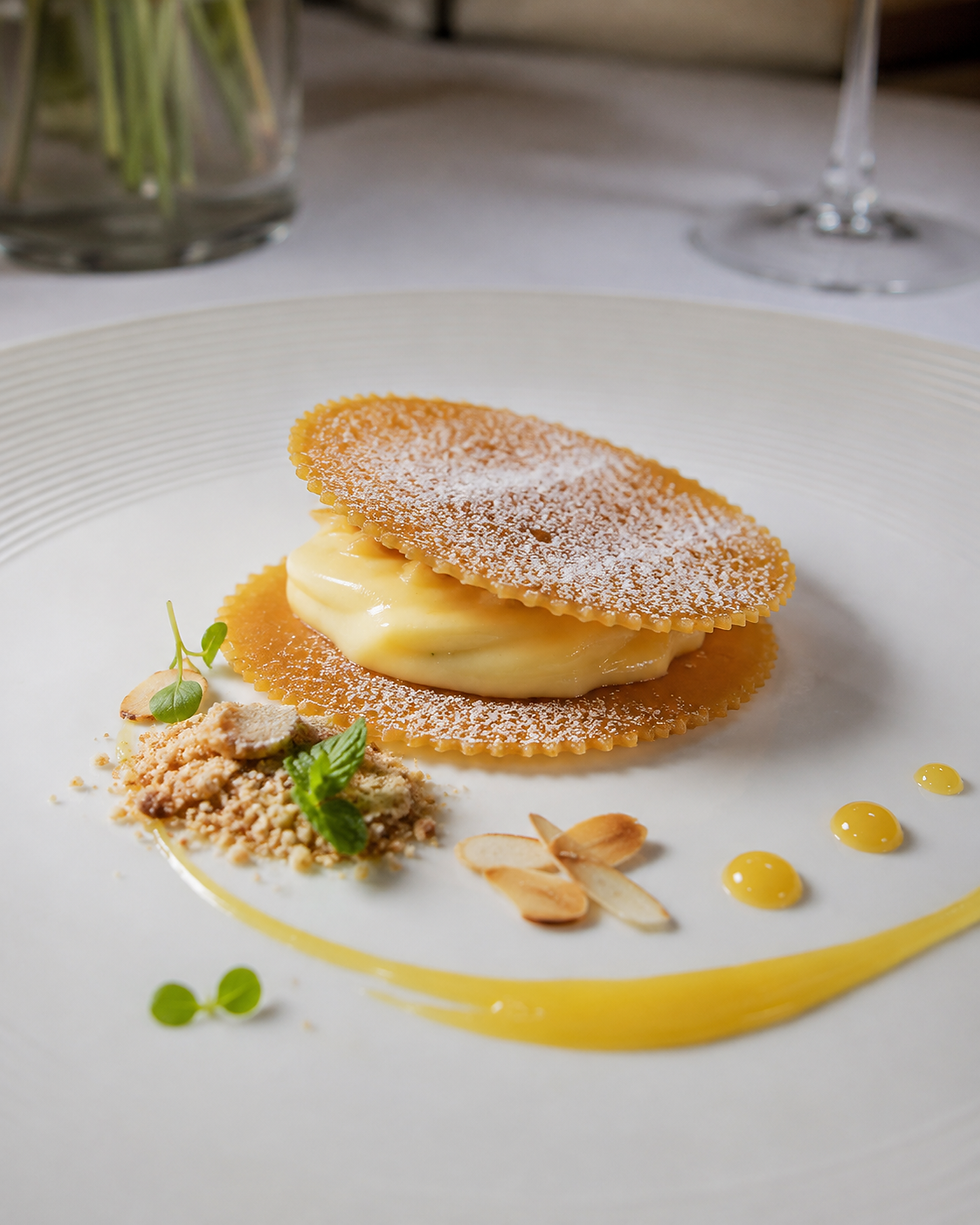
A genovese is a very small idea executed with unusual care. Two thin rounds of short pastry, a spoonful of lemon scented pastry cream between them, the edges pressed closed, a short bake that leaves the surface almost white, and a heavy dusting of powdered sugar. It is eaten warm, within minutes of the oven, and the cream is still loose enough to move when you bite through. That is the whole thing, and it belongs to Erice, the walled town above Trapani, as completely as any Sicilian sweet belongs anywhere.
What makes it difficult is exactly what makes it look simple. The pastry must be thin enough to stay delicate and sealed well enough to hold a wet filling through the oven. The cream must be firm going in and soft coming out. The bake must set the frolla without colouring it. There is nothing to hide behind: no glaze, no chocolate, no fruit, just pastry, cream, lemon and sugar.
The version below is the classic round one, two discs sealed at the rim, as the Erice bakeries sell them. Some kitchens fold a single disc into a half moon instead, which is quicker and holds slightly less cream. Both are correct and the method works for either.
Yield: 12 pastries. Prep: 45 minutes. Cream cooling: 2 hours. Bake: 16 minutes. Total: about 3 hours 15 minutes. Difficulty: intermediate. Course: dessert and pastry. Region: Sicily, Erice and the province of Trapani.
The Story
Erice sits at 2,460 feet (750 m) above the sea on a mountain over Trapani, inside Norman walls, in fog for much of the winter. For centuries its pastry came out of its convents. The Real Monastero di San Carlo, home to a community of cloistered nuns, sold almond sweets, mustazzoli and genovesi through a wooden wheel set in the wall so the seller was never seen by the buyer, and the recipes stayed inside as a matter of rule rather than secrecy. Erice had almonds from the countryside, eggs, flour, lard from local pigs and lemons from the coastal plain, and the pastry built on that list has hardly changed.
The name has never been settled. The most repeated explanation links it to the Genoese merchants who traded through the port of Trapani, others to a shape said to resemble a sailors cap of Genoese cut. The modern chapter is documented, though. Maria Grammatico, born in 1940, was sent as a child to the institute attached to San Carlo after her father died, spent years there learning the work by watching the nuns, and in 1964 opened her own pasticceria in via Vittorio Emanuele in Erice. Her account of that childhood, written with Mary Taylor Simeti and published in 1994 as Bitter Almonds, carried the genovesi of Erice out of Sicily and made them the thing visitors climb the mountain for.
Ingredients
For the pastry cream
Whole milk, 2 cups (480 ml)
Egg yolks, 5
Granulated sugar, 1/2 cup (100 g)
All purpose flour, 1/4 cup (35 g)
Lemon zest, in wide strips with no white pith, from 1 unwaxed lemon
Fine sea salt, 1 small pinch
For the pasta frolla
All purpose flour, 2 1/2 cups (315 g)
Lard, strutto, cold, 7 tbsp (100 g), or cold unsalted butter
Granulated sugar, 1/2 cup (100 g)
Egg yolks, 2
Whole egg, 1
Baking powder, 1/2 tsp (2 g)
Finely grated lemon zest, from 1 lemon
Fine sea salt, 1/4 tsp (1.5 g)
Cold water, 1 to 2 tbsp (15 to 30 ml), only if the dough will not come together
For finishing
Whole milk, 2 tbsp (30 ml), for brushing the tops
Powdered sugar, 1/3 cup (40 g), for dusting
Preparation
Infusing the milk with lemon
Peel the lemon in wide strips with a vegetable peeler, taking only the yellow and none of the white pith underneath, which is bitter and will carry that bitterness into the cream. Put the strips in a saucepan with the milk, bring it to the edge of a simmer, take it off the heat and leave it covered for 15 minutes. There is no vanilla in a genovese: lemon is the only aromatic and it must be pronounced, so do not shorten the infusion.
Cooking the pastry cream
Whisk the yolks with the sugar until pale, then whisk in the flour and the pinch of salt until smooth. Remove the lemon peel from the milk, rewarm it, and pour it into the yolks in a thin stream while whisking. Return it to the pan over medium low heat and cook, whisking constantly into the corners, until it thickens and bubbles once or twice, about 4 minutes. That final boil is not optional: it cooks out the raw flour and deactivates the enzyme in the yolks that would otherwise thin the cream as it cools.
Chilling the cream flat and fast
Pour the cream onto a cold tray, spread it to about 1/2 inch (12 mm) and press plastic wrap directly onto the surface so no skin forms. Cool it 20 minutes at room temperature, then refrigerate at least 2 hours until cold and firm. A shallow layer cools in a fraction of the time a bowl takes, which matters for safety as much as for texture. Beat it smooth before loading the piping bag.
Making the frolla with lard
Rub the cold lard into the flour, sugar, baking powder, lemon zest and salt with your fingertips until the mixture is sandy and no lumps of fat remain. Add the yolks and the whole egg and bring the dough together quickly, adding cold water only if it stays dry. Work it as little as possible, flatten it, wrap it and rest it 30 minutes in the refrigerator. Lard gives a short, sandy, faintly savoury crumb that butter does not.
Rolling and cutting the discs
Roll the dough on a lightly floured surface to about 1/8 inch (3 mm), thinner than feels comfortable. Cut 24 discs of 3 inches (7.5 cm), rerolling the scraps once and no more. Keep half on a lined tray in the refrigerator while you work with the other half, since frolla made with lard softens quickly and a soft disc tears as you lift it.
Filling and sealing the genovesi
Pipe a mound of cold pastry cream, about 1 tablespoon, into the centre of twelve discs, leaving a clear border of 1/2 inch (12 mm) all round. Lay a second disc over each, press the border firmly with your fingertips and then with the back of a fork, and check the seal is continuous. Any gap becomes an escape route for the cream under the steam pressure inside.
Baking pale
Brush the tops very lightly with milk, which helps the powdered sugar hold later, and bake at 375°F (190°C) for 15 to 17 minutes. They are done when the pastry is set and dry to the touch and still pale ivory, with at most a hint of gold at the rim. Erice genovesi are not a browned pastry, and a dark one tastes of baked flour rather than of lemon and cream.
Dusting and serving warm
Let them settle on the tray for 3 or 4 minutes, no longer, then dust generously with powdered sugar through a fine sieve and serve while they are still warm. This is the point of the whole pastry: the frolla short and just warm, the cream loose and fragrant, the sugar melting where it meets the heat. Cold they are still good, and not the same thing.
Plating
In Erice they are handed over on a paper napkin and eaten at once, and any presentation that delays that works against the pastry. For the house, pile them on a warmed plate, dust at the table so the sugar is still bright, and serve nothing but coffee with them.
For a restaurant dessert, one per plate is correct, set slightly off centre and dusted only on the pastry so the plate stays clean. A spoonful of lemon granita or a few macerated strawberries adds the acidity the dish can carry. Do not add sauce: the filling is already the sauce, and anything poured around it softens the frolla within a minute.
Professional Technique
Everything technical in this pastry comes down to enclosing a wet filling inside short pastry and getting both to the table in the right state. Pastry cream is roughly three quarters water by weight. Sealed under a lid of frolla and heated, that water turns to steam and the parcel inflates from within, which is why a genovese domes and why an imperfect seal splits. The dough must be thin enough to bake through in the time the cream needs to warm, and sealed with real pressure round a wide border.
The fat is the second decision. Lard is nearly pure fat with very little water, and its large soft crystals coat flour particles thoroughly, shortening the crumb and limiting gluten development even when the dough is handled. The pastry stays tender against a wet filling for the few minutes it has to survive, where an all butter frolla of the same thinness turns leathery faster.
The third is the deliberately low colour. Most baked pastry is judged by browning, and here browning is the failure. A short bake at 375°F (190°C) sets the starch and egg in the frolla and warms the cream through without pushing the surface into the Maillard range, which keeps the lemon present. Colour also means the cream was held too long at heat.
Texture and Moisture Control
The cream has to be at two different consistencies within twenty minutes: firm and cold when it is piped, loose and warm when it is eaten. Cooking the flour out properly is what makes that possible. Flour thickened cream sets solidly in the refrigerator and softens again with heat, where a cornstarch cream is slacker cold and tends to run out of the parcel in the oven. Five yolks for 2 cups (480 ml) of milk is deliberately rich for the same reason: yolk fat and protein hold the structure at oven temperature.
Moisture moves from the cream into the pastry from the moment the two meet, so keep the interval between filling and baking under 20 minutes and put the trays in cold. A filled tray left out for an hour bakes with a damp base that never dries. To hold them, refrigerate and bake straight from the cold, adding a minute.
Once baked, they are on a short clock. The trapped steam condenses and softens the pastry from within while the outside cools, and by 30 minutes the frolla has lost its snap. Dust and serve at 4 minutes out of the oven, with the pastry around 120°F (50°C) and the cream warm but not hot. Never stack them warm: the weight flattens the dome and the sugar underneath dissolves.
Professional Mise en Place
The cream is made the day before, the frolla the morning of service, and filling and baking happen to order in batches. Genovesi cannot be baked ahead, which is the single most important scheduling fact about them.
Equipment and tools
Heavy saucepan, balloon whisk and a cold shallow tray for cooling the cream
Piping bag with a plain 1/2 inch (12 mm) tip
Rolling pin and a plain 3 inch (7.5 cm) round cutter
Two lined baking trays and a pastry brush
Fine sieve or shaker for the powdered sugar
Prepared ahead
Pastry cream cooked, spread thin, covered on the surface and refrigerated, up to 2 days
Frolla mixed and rested, up to 24 hours refrigerated, or frozen for 1 month
Discs cut and stacked between parchment on a tray, refrigerated, up to 4 hours
Powdered sugar sieved into a shaker, ready at the pass
Service setup
Oven steady at 375°F (190°C), one tray at a time, middle shelf
Filled trays held in the refrigerator and baked to order in batches of six
Cut discs kept cold and covered, never left out on the bench
Warm plates and the sugar shaker at the pass, so the dusting is the last action
Chef Tips
Use lard if you can get it, the good white rendered kind rather than an industrial block. Here the traditional fat is function rather than nostalgia, and the difference in shortness against a wet filling is obvious side by side. With butter, keep it very cold and roll slightly thicker, at 1/6 inch (4 mm), to allow for the extra water.
Take the zest for the infusion with a peeler, not a grater. Wide strips give clean lemon oil and lift out easily; grated zest leaves fibres in the cream that you feel on the tongue. Save the grated zest for the frolla.
Weigh the cream into the parcels or pipe by count, not by eye. A tablespoon is a lot in a 3 inch (7.5 cm) disc and an overfilled genovese splits every time, usually as the dome sets. Cream on the tray means too much filling or too narrow a seal.
Bake in small batches and serve each one immediately, even at home. Fill twelve, bake six, serve them, then bake the second six while people eat the first. Everything good about a genovese happens in the first ten minutes out of the oven.
Common Mistakes
Sealing the rim too narrowly. A pinched edge of a few millimetres cannot hold the steam that builds inside, and the cream escapes and burns on the tray. Leave a clear border of 1/2 inch (12 mm) and set the seal with a fork.
Filling with warm or soft cream. Cream that has not chilled properly flows into the seal and stops it bonding, and thins further in the oven. Spread it thin to cool, refrigerate a full 2 hours and beat it smooth before piping.
Baking them until golden. A browned genovese tastes of toasted flour and loses the lemon aroma that carries the whole pastry. Pull them while the surface is still pale ivory with at most a faint gold at the rim, after 15 to 17 minutes at 375°F (190°C).
Rolling the frolla too thick. At 1/4 inch (6 mm) it cannot bake through before the cream overheats, and the pastry eats heavy and floury. Roll to 1/8 inch (3 mm) and accept that the discs are fragile.
Serving them cold or reheated hours later. Trapped steam softens the pastry as it sits and the cream firms again, so a cold genovese is a duller thing. Bake to order, dust at four minutes and serve at once.
Wine Pairing
Moscato d'Asti DOCG: The easiest and one of the best answers. Low in alcohol, gently sparkling and openly grapey, it has the lightness a warm custard pastry needs and enough sweetness to sit level with the dusting rather than under it. Peach and orange blossom run parallel to the lemon in the cream. Serve at 46°F (8°C).
Recioto di Soave DOCG: Made from dried Garganega, with almond, candied citrus and yellow apple over firm acidity. That acidity is what makes it work: it lifts the egg yolk richness of the cream and resets the palate between bites. The almond note nods at the almond pastries Erice is equally known for.
Vin Santo del Chianti Classico DOC: The choice when the pastries are served late and with coffee. Long oxidative ageing in small casks gives dried apricot, walnut and caramel, and a texture thick enough to stand against a warm filling. Choose a drier bottling, or the sugar of the dusting and of the wine pile up.
Ramandolo DOCG: From Verduzzo grapes in the hills of Friuli, sweet but with a faintly tannic grip unusual in a white, which cuts the fat of the lard pastry as a softer dessert wine cannot. Honey, quince and dried pear against the lemon cream.
Colli Orientali del Friuli Picolit DOCG: The most delicate wine on this list and the one to pour if the pastries are the only dessert. Picolit is light, floral and only moderately sweet, with acacia honey and apricot, and never overwhelms a filling this gentle. Serve small measures at 46°F (8°C).
Storage & Reheating
Baked genovesi are a same day pastry. They hold at room temperature for about 6 hours, after which the pastry has softened and the cream tightened, and the egg and dairy filling means they must be refrigerated after that. Covered in the refrigerator they are safe for 2 days and honest for one, and should be warmed again rather than served cold.
To bring one back, give it 6 to 8 minutes in a 300°F (150°C) oven, uncovered on a tray, then dust with fresh powdered sugar. The dry heat drives off moisture absorbed overnight. Never use a microwave, which steams the frolla soft in seconds, and dust only after reheating.
The components store far better than the finished pastry. Pastry cream keeps 2 days refrigerated, covered on the surface, and must not be frozen, since it separates on thawing. Frolla keeps 24 hours refrigerated and 1 month frozen, wrapped flat. Unbaked filled genovesi freeze on a tray, bag for 3 weeks and bake from frozen at 375°F (190°C) with 4 minutes added.
Nutrition
Per pastry, based on a yield of 12 pastries:
Calories: 310 kcal
Total Fat: 14 g
Saturated Fat: 5.5 g
Trans Fat: 0 g
Unsaturated Fat: 7.5 g
Cholesterol: 135 mg
Sodium: 85 mg
Total Carbohydrates: 39 g
Fiber: 1 g
Total Sugars: 17 g
Added Sugars: 15 g
Protein: 6 g
Lactose: 2 g
Principal micronutrients: calcium, phosphorus, vitamin A, vitamin D, riboflavin, selenium, choline
These figures are estimates. They shift with the fat used, since lard and butter differ in water content, and with how heavily the pastries are dusted, which can add 5 g of sugar each.


Comments