
Gnocchi di Farro con Carciofi, Burro alle Erbe e Pecorino Romano (Italian Spelt Gnocchi with Artichokes, Herb Butter and Pecorino Romano)
- 4 days ago
- 8 min read
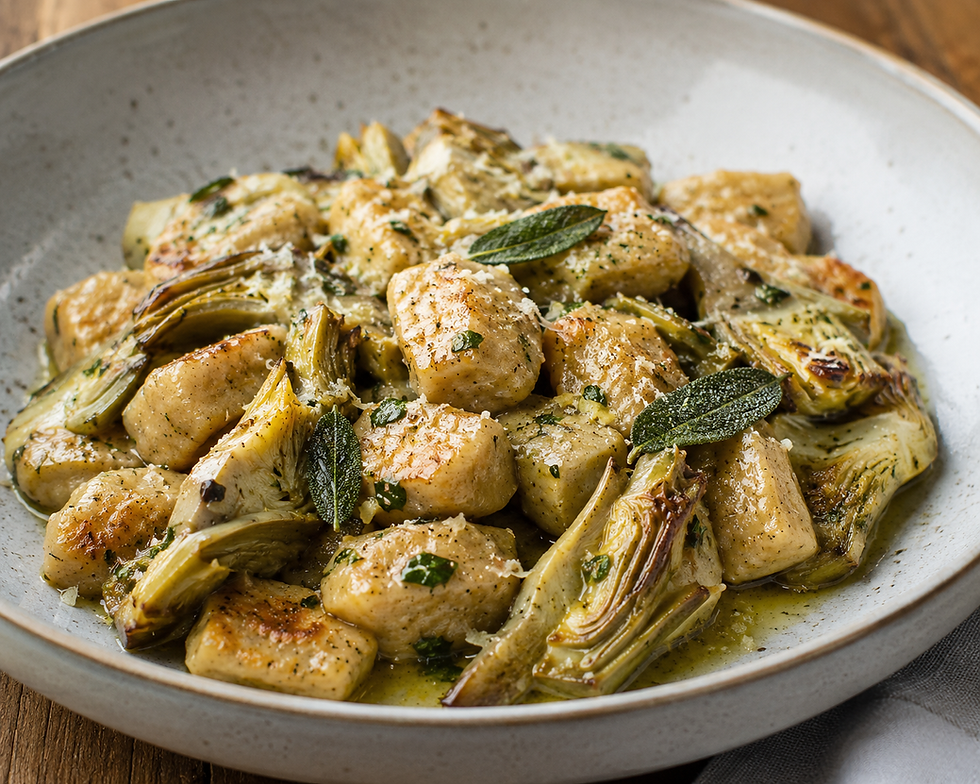
Italian Spelt Gnocchi with Artichokes, Herb Butter and Pecorino Romano
Story of the Dish
These gnocchi move away from the classic potato-only formula by introducing spelt flour, which adds a rustic, nutty flavor and a slightly firmer bite.
The artichokes remain recognizable rather than disappearing into a cream. The sauce is built directly in the pan from herb butter, artichoke juices, Pecorino and starchy gnocchi water, producing a glossy emulsion rather than a heavy sauce.
Recipe Information
Region: Italy
Difficulty: Intermediate
Servings: 4
Prep Time: 35 minutes
Cook Time: 1 hour
Total Time: 1 hour 35 minutes
Ingredients
For the gnocchi
1 1/2 lb Yukon Gold potatoes
3/4 cup spelt flour, plus extra as needed
1/4 cup all-purpose flour
1 large egg yolk
1/3 cup finely grated Parmigiano Reggiano
1/2 tsp fine sea salt
Pinch of nutmeg
For the artichokes
5 fresh artichokes
1 lemon
3 tbsp extra-virgin olive oil
1 garlic clove
1 small shallot
1/3 cup dry white wine
1/2 cup vegetable stock
Sea salt and black pepper
For the herb butter
5 tbsp unsalted butter
6 sage leaves
2 sprigs thyme
1 tbsp chopped parsley
1 tsp grated lemon zest
1/2 cup finely grated Pecorino Romano
Reserved gnocchi cooking water
Preparation
1. Cook and rice the potatoes
Bake whole potatoes at 400°F for 50–60 minutes until tender. Peel while hot and pass through a ricer. Let steam escape for about 5 minutes.
2. Make the dough
Add spelt flour, all-purpose flour, Parmigiano, salt, nutmeg and yolk. Bring together gently with fingertips or a bench scraper. Add only enough extra flour to prevent sticking.
3. Shape
Roll the dough into 3/4-inch ropes, cut into 3/4- to 1-inch pieces, and ridge lightly on a gnocchi board or fork.
4. Cook the artichokes
Sauté shallot, garlic and sliced artichokes in olive oil, deglaze with white wine, add stock, and cook 8–10 minutes until tender but intact. Remove garlic.
5. Prepare the herb butter
Melt butter gently with sage and thyme until foamy and lightly nutty, but not deeply browned. Remove thyme stems.
6. Boil and finish
Cook gnocchi in salted water. Once they rise, cook 30–45 seconds more, then transfer directly to the artichoke pan. Add herb butter and about 1/4 cup cooking water, swirl to emulsify, then add Pecorino, parsley and lemon zest.
Professional Technique
For Gnocchi di Farro con Carciofi, Burro alle Erbe e Pecorino Romano (Italian Spelt Gnocchi with Artichokes, Herb Butter and Pecorino Romano), the artichoke must remain a clearly identifiable ingredient rather than disappearing into generic richness. Fresh artichokes oxidize rapidly once cut, so prepare the acidulated water before trimming. Remove tough outer leaves, pare the stem rather than discarding it, and clean the choke completely when the variety requires it. Keep the trimmed pieces submerged only as long as necessary; prolonged soaking can dilute flavor. The objective is a clean, concentrated vegetal taste with the characteristic gentle bitterness that makes artichokes valuable in Italian cooking.
Texture is the first control point. Artichokes become unpleasant when they are either undercooked and fibrous or overcooked until their structure collapses. Cook them until a knife enters the heart with light resistance, then stop the cooking or move immediately to the next stage of the recipe. If the preparation is later baked, fried, gratinéed or finished in a pan, leave the artichokes slightly firmer during the first cooking so the final heat does not turn them to paste.
Season in layers. Salt the artichokes during cooking, season dairy or grain components separately, and adjust the final sauce only after reductions and cheeses have contributed their own salinity. Lemon should brighten the dish without making it taste lemony. Use zest for aroma and juice for acidity, adding the juice late whenever possible so its fresh character is not cooked away. Extra virgin olive oil should taste clean and peppery, but it should not flood the plate.
Temperature management is equally important. Hot components should be genuinely hot at service, while fresh cheeses, herbs and delicate garnishes should be added at the last practical moment. When a sauce contains cheese, avoid hard boiling after the cheese is incorporated because excessive heat can separate fat from water and create a grainy texture. When the dish contains pasta or gnocchi, finish it in the pan with the sauce and a controlled amount of cooking water so starch can create a stable emulsion.
Mise en place determines whether the final presentation feels professional. Trim and portion the artichokes evenly, prepare garnishes before the main cooking begins, warm serving plates for hot dishes, and have the finishing cheese, herbs, oil and acidity ready. The final minute should be reserved for checking consistency, seasoning and temperature rather than searching for ingredients. This is especially important with artichokes because their ideal texture can pass quickly once they are fully tender.
Flavor Balance and Ingredient Logic
Artichokes are unusual because their cynarin and other phenolic compounds can make water and some wines taste unexpectedly sweet after a bite. That is one reason aggressive oak, excessive alcohol and obvious residual sugar can feel awkward beside them. Savory cheeses, mushrooms, lamb, shellfish, nuts and herbs can all work, but the supporting ingredients should reinforce rather than erase the artichoke. Rich elements need acidity or bitterness; delicate seafood needs restraint; aged cheese needs enough moisture in the sauce to avoid a dry finish.
Use cheese as seasoning and texture, not as camouflage. Parmigiano Reggiano, Pecorino, Taleggio, Fontina, Castelmagno and other Italian cheeses each behave differently when heated. Hard grating cheeses add umami and salinity, washed-rind or semi-soft cheeses add melt and aroma, and fresh cheeses add moisture. Their quantity should be judged against the strength of the artichoke and the other main ingredient. The plate should still taste coherent after three or four bites, not merely impressive in the first one.
Service Standard
Before serving, taste one complete bite containing the principal components together. Correct salt first, acidity second and fat balance third. Remove any garnish that does not improve flavor or texture. Keep the rim of the plate clean, use sauce with intention, and leave enough negative space that the main ingredient remains visually legible. A restaurant-style presentation is not created by adding more elements; it comes from controlling proportion, temperature, texture and placement.
Ingredient Selection and Prep Discipline
The quality of Gnocchi di Farro con Carciofi, Burro alle Erbe e Pecorino Romano (Italian Spelt Gnocchi with Artichokes, Herb Butter and Pecorino Romano) starts before heat is applied. Choose artichokes that feel heavy for their size, with tight leaves and fresh-looking stems. The stem is not waste: once peeled, its inner core is tender and flavorful. Use a sharp knife rather than crushing the leaves, and keep the trimmed vegetable protected from air with lemon water while the remaining mise en place is completed. At the same time, do not leave artichokes soaking for an extended period, because water can wash away some of the flavor that should remain concentrated in the finished dish.
When the recipe contains several components, organize them by cooking time. Sauces, braises, pastry bases, grains and fillings can often be prepared first, while artichokes should be trimmed closer to cooking. This prevents oxidation and gives better control over their final texture. Measure garnishes before service, grate cheese before the final pan work begins, and keep stock or cooking water hot if it will be used for emulsifying. A disciplined sequence reduces the temptation to overcook one component while waiting for another.
Texture, Emulsion and Final Seasoning
Texture should be checked with a knife, fork, or direct tasting rather than by time alone. Artichoke varieties differ in size, age and density, so a written cooking time is always a guide. The heart should become tender without losing all resistance. If the recipe finishes in the oven or pan, stop the first cooking stage slightly early. For fried preparations, surface moisture must be removed carefully before breading or frying; excess water creates dangerous spattering and prevents crispness.
For sauces, the goal is a stable texture that coats rather than floods. Butter and cheese emulsions need moderate heat. Add starchy water gradually and keep the pan moving so fat and water remain integrated. Cream-based elements should be reduced before delicate cheeses are added. When a sauce becomes too thick, loosen it with hot stock or cooking water instead of adding more fat. When it is too thin, reduce before the final cheese or butter goes in.
Final seasoning belongs at the pass. Salt can intensify after reduction, aged cheese can contribute more salinity than expected, and cured meats or bottarga can change the balance completely. Taste the whole combination before adding the final salt. Then check acidity. A few drops of lemon may be enough to sharpen a rich preparation, but too much will flatten the nuanced bitterness that makes artichoke distinctive. Finish with olive oil only if it improves aroma and mouthfeel rather than simply adding shine.
Restaurant Service and Holding
Artichoke dishes are best when the service window is controlled. Fried elements lose crispness quickly; soufflés and gratins must go directly to the table; pasta and gnocchi continue absorbing sauce after leaving the pan. Warm plates for hot preparations and chill plates for cold terrines or salads. Avoid holding finished artichokes in dry heat, which toughens exposed leaves, and avoid sealing hot fried items under a cover, where trapped steam destroys crispness.
A clean final plate should make the main idea obvious in one glance. Use height only when the structure can support it, and avoid excessive microgreens, herbs, or decorative powders that do not improve flavor. The artichoke should remain visible, the sauce should be placed with restraint, and contrasting textures should be positioned so they can be eaten together. The objective is not visual complexity but a plate that eats as precisely as it looks.
Chef Tips
Use dry, floury potatoes and let steam escape before mixing.
Handle the dough as little as possible.
Reserve enough cooking water to emulsify the final sauce.
Add Pecorino gradually so it remains creamy.
Mistakes to Avoid
Boiling peeled potatoes makes them waterlogged.
Kneading gnocchi dough like bread makes it dense.
Overcooking the artichokes removes their identity.
Draining gnocchi and pouring sauce over them misses the essential pan finish.
Serving and Presentation
Arrange 8–10 gnocchi on a warm wide plate with artichoke wedges between them. Spoon only enough herb-butter emulsion to glaze the plate and finish with Pecorino, olive oil and minimal lemon zest.
Wine Pairing
Verdicchio dei Castelli di Jesi Classico: acidity and almond notes suit artichoke and Pecorino.
Soave Classico: mineral freshness balances butter.
Vermentino di Gallura: herbal Mediterranean character complements artichokes.
Etna Bianco: mineral and saline contrast.
Fiano di Avellino: fuller structure for the nutty spelt.
Nutrition per Serving
Calories: approximately 610 kcal
Protein: 1.02 oz
Carbohydrates: 2.75 oz
Fat: 0.71 oz
Saturated Fat: 0.25 oz
Fiber: 0.18 oz
Sugars: 0.21 oz
Sodium: 780 mg
Cholesterol: 90 mg
Approximate nutrition per serving: 540 calories, 0.63 oz protein, 2.54 oz carbohydrates, 0.71 oz fat, 0.28 oz saturated fat, 0.14 oz fiber, 0.18 oz sugars, 620 mg sodium, and 55 mg cholesterol. Values vary with the exact ingredients and portion size.
Verdicchio dei Castelli di Jesi
Fresh acidity and savory structure keep the pairing balanced.
Vermentino di Gallura
Citrus, herbs, and salinity complement many Italian preparations.
Etna Bianco
Minerality and tension support complex flavors without heaviness.
Chianti Classico
Sangiovese acidity works well when the dish benefits from a red wine.
Storage and Reheating
Pasta is best served immediately after finishing in the sauce. Refrigerate leftovers promptly and use within 1 day. Reheat gently in a skillet with a splash of water or stock so the sauce loosens without drying the pasta.
Chef Gianluca


Comments