
Torta di Mele Altoatesina con Cannella e Vaniglia
- 5 days ago
- 4 min read
Updated: 22 hours ago
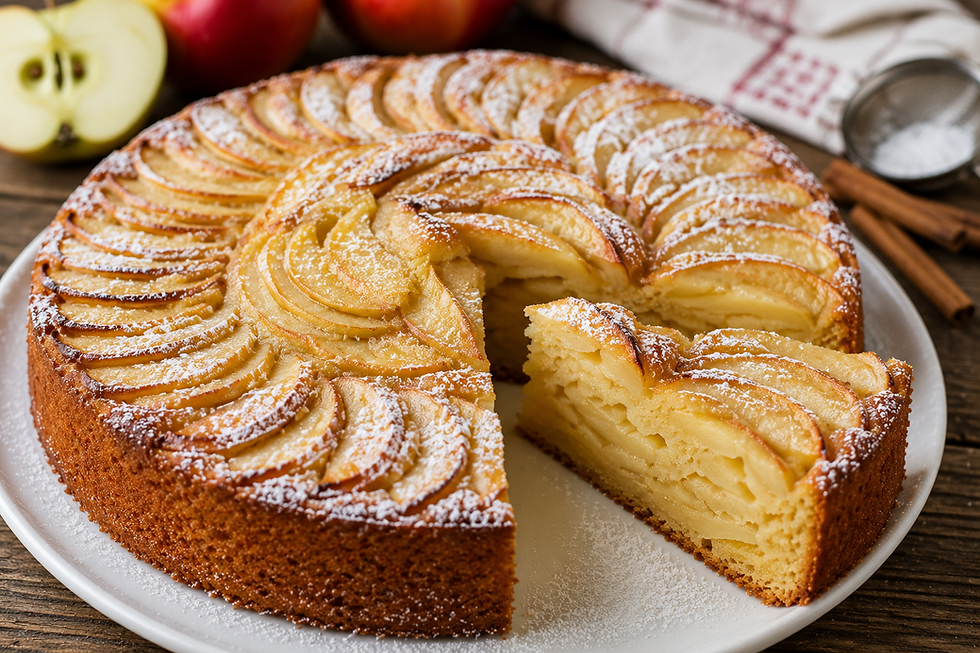
Torta di Mele Altoatesina con Cannella e Vaniglia
Story of the Dish
Among Italy's finest apple desserts, the Torta di Mele Altoatesina holds a special place. It comes from South Tyrol (Alto Adige), Italy's northernmost region, where apple orchards blanket the valleys beneath the Dolomite Mountains. This area produces some of Europe's highest-quality apples thanks to its cool alpine climate, warm sunny days, and mineral-rich soils.
Unlike many apple cakes around the world, the Altoatesina version focuses on the fruit itself. Thin slices of fresh apples are layered generously throughout the batter, allowing them to soften during baking while releasing their natural juices. The result is an exceptionally moist cake with delicate notes of butter, vanilla, lemon, and cinnamon.
Traditionally enjoyed with afternoon coffee or tea, this rustic cake perfectly represents the philosophy of Northern Italian baking: simple ingredients, precise technique, and exceptional local produce.
Recipe Information
Servings: 4. Prep Time: 20 minutes. Cook Time: 30 minutes. Total Time: 50 minutes. Adjust the yield as needed while preserving the ingredient ratios and intended texture of the dish.
Ingredients
Serves: 10–12
For the Cake
2½ cups (11.11 oz) all-purpose flour
¾ cup (6 oz) unsalted butter, softened
1 cup (7.05 oz) granulated sugar
4 large eggs
2 tsp baking powder
½ cup (4.06 fl oz) whole milk
1 tsp pure vanilla extract
Zest of 1 organic lemon
½ tsp ground cinnamon
Pinch of fine sea salt
Apple Filling
4 large Honeycrisp or Golden Delicious apples
Juice of ½ lemon
2 tbsp granulated sugar
1 tsp cinnamon
1 tbsp melted butter
For Finishing
Powdered sugar
Optional: sliced almonds
Preparation
Preheat the oven to 350°F (347°F).
Grease and line a 9-inch (9.06 in) springform pan with parchment paper.
Peel, core, and slice the apples very thinly. Toss them with the lemon juice, cinnamon, sugar, and melted butter. Set aside while preparing the batter.
In a large mixing bowl, beat the butter and sugar for 5–6 minutes until pale and fluffy.
Add the eggs one at a time, beating well after each addition.
Mix in the vanilla extract and lemon zest.
In another bowl combine the flour, baking powder, cinnamon, and salt.
Gradually add the dry ingredients, alternating with the milk, mixing only until smooth.
Spread one-third of the batter into the prepared pan.
Arrange one layer of apples evenly over the batter.
Repeat with another layer of batter, followed by more apples.
Finish with the remaining batter.
Decorate the top with the remaining apple slices arranged in overlapping concentric circles.
If desired, sprinkle with sliced almonds for extra crunch.
Bake for 50–60 minutes, or until the cake is golden brown and a toothpick inserted into the center comes out clean.
Allow the cake to cool for at least 30 minutes before removing it from the pan.
Dust generously with powdered sugar just before serving.
Chef Tips
Use firm apples that hold their shape during baking. Honeycrisp, Golden Delicious, Pink Lady, or Braeburn are excellent choices.
Slice the apples uniformly thin so they cook evenly and create beautiful layers.
A small amount of lemon juice prevents oxidation while adding freshness.
Let the cake cool completely before dusting with powdered sugar.
For an authentic South Tyrolean touch, serve warm with lightly whipped cream or homemade vanilla gelato.
— Chef Gianluca
Technique and Ingredient Notes
For a professional result, treat the ingredient list as a system rather than a collection of separate items. Bring ingredients to the temperatures required by the method before cooking, measure accurately, and prepare the mise en place completely. Small differences in moisture, pan size, burner strength, and ingredient maturity can change cooking time, so use texture, aroma, and color as the final indicators of doneness.
Salt should be added in stages. Early seasoning helps build depth, while the final adjustment should happen only after reductions, cheeses, cured ingredients, stocks, or sauces have concentrated. When fat is used, allow it to carry aroma without becoming greasy; when acidity is present, use it to sharpen and balance the dish rather than make it taste sour.
Temperature control is especially important in Italian cooking. High heat is useful for rapid browning, but once color is established, reduce or moderate the heat as needed to protect tenderness and prevent bitter flavors. Rest roasted or seared proteins when appropriate, keep pasta and risotto moving through their finishing stage, and serve fried preparations immediately so their texture remains crisp.
Before plating, taste every major component together. A sauce that tastes correct by itself may need adjustment once paired with pasta, meat, fish, vegetables, cheese, or garnish. The finished plate should have a clear primary flavor, supporting secondary notes, and enough contrast in texture to remain interesting from the first bite to the last.
Mistakes to Avoid
Do not rush the main cooking stage, overcrowd the pan, or compensate for weak flavor with excess salt. Follow the visual and textural cues of the recipe and keep delicate ingredients away from unnecessary high heat.
Serving and Presentation
Serve at the appropriate temperature and keep the presentation clean and natural. The principal ingredient should remain clearly visible, with restrained edible garnishes that reinforce the flavors already present in the recipe.
Wine Pairing
This traditional apple cake pairs wonderfully with:
Moscato d'Asti
Gewürztraminer Vendemmia Tardiva
Vin Santo
Cappuccino or espresso
Nutrition per Serving
Approximate nutrition per serving: 430 calories, 0.25 oz protein, 1.83 oz carbohydrates, 0.78 oz fat, 0.46 oz saturated fat, 0.07 oz fiber, 1.2 oz sugars, 170 mg sodium, and 95 mg cholesterol. Values vary with portion size and exact ingredients.
Storage and Reheating
Store covered in the refrigerator according to the most perishable ingredient, generally up to 3 days. Frozen preparations should remain tightly wrapped to prevent ice crystals and odor absorption. Temper briefly before serving when needed for the intended texture.


Comments