
Uovo Morbido al Tartufo Bianco d’Alba (Italian Soft Egg)
- 6 days ago
- 5 min read
Updated: 1 day ago
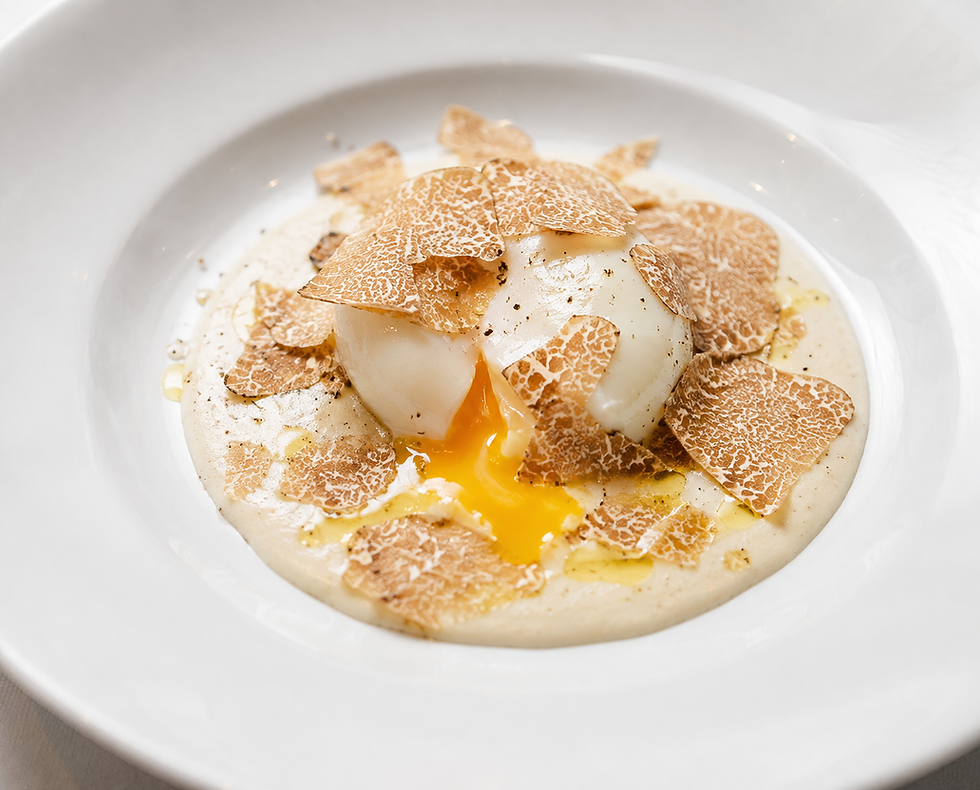
Soft egg with Parmigiano fondue and Alba white truffle
Story of the Dish
Uovo Morbido al Tartufo Bianco d’Alba
Uovo Morbido al Tartufo Bianco d’Alba (Italian Soft Egg with Alba White Truffle, Parmigiano Fondue and Brown Butter)
Few ingredients represent the luxury and elegance of Piedmont like Tartufo Bianco d’Alba. Its aroma is delicate, so the best approach is to surround it with warm, rich ingredients that amplify its fragrance without covering it. Eggs are one of its greatest partners: the yolk captures the perfume while Parmigiano Reggiano and butter provide depth.
Recipe Information
Region: Italy
Difficulty: Intermediate
Servings: 4
Ingredients
4 large farm-fresh eggs
Fine sea salt, to taste
1 cup heavy cream
3 oz Parmigiano Reggiano, finely grated
1 tbsp unsalted butter
Pinch of white pepper
3 tbsp unsalted butter for brown butter
1–1.5 oz fresh Alba white truffle
Preparation
1. Heat the cream gently without boiling. Gradually whisk in Parmigiano, then butter, until smooth and glossy. Keep warm.
2. Cook the eggs in water held around 145°F for about 45 minutes, or poach traditionally for 3–3½ minutes. The yolk must remain fluid.
3. Brown the butter gently until the milk solids turn pale hazelnut, then remove immediately from the heat.
4. Spoon a shallow pool of Parmigiano fondue onto a warm plate, place the soft egg in the center, add a few drops of brown butter, and shave fresh Alba white truffle generously over the egg.
Professional Technique
Before serving Uovo Morbido al Tartufo Bianco d’Alba (Italian Soft Egg with Alba White Truffle, Parmigiano Fondue and Brown Butter), make one final technical check: the main ingredient must retain its intended texture, the sauce or dressing must be cohesive rather than separated, and seasoning must be judged only after every concentrated ingredient has been incorporated. Taste a complete bite, not the sauce alone. If the dish needs freshness, correct it with acidity or a small amount of cooking liquid before reaching automatically for more salt. If the texture is too tight, loosen gradually; if too loose, reduce gently rather than adding unnecessary thickeners. Keep the final presentation connected to the recipe's regional character. Warm savory plates and chill plates for cold preparations when appropriate. Portion consistently, leave the principal ingredient visible, and use garnish only when it contributes flavor. Serve immediately once the correct texture is achieved, because rice, pasta, cheese emulsions, fried foods, and delicate proteins all deteriorate when held too long. For advance preparation, complete only the steps that do not compromise texture. Chop aromatics, measure ingredients, prepare stocks and sauces, and organize equipment ahead of time, but reserve final cooking, emulsification, crisping, or mantecatura for service. This keeps the recipe precise without making the process unnecessarily complicated. When reheating leftovers, use lower heat than during the original cooking and restore moisture gradually. Starches need a splash of water or stock, braised dishes benefit from reheating in their own sauce, and cheese-based preparations should never be boiled. The goal is to return the food to serving temperature without cooking it a second time.
In Uovo Morbido al Tartufo Bianco d’Alba (Italian Soft Egg with Alba White Truffle, Parmigiano Fondue and Brown Butter), temperature control is the central technique. Eggs should cook gently enough that the yolk remains at the intended softness, while cheese fondue must stay below a hard boil to prevent fat separation and graininess. Melt cheese gradually into warm dairy or butter, stirring smoothly rather than whipping air into it. White truffle should never be cooked aggressively; shave it onto the hot finished dish so residual heat releases aroma without destroying its volatile perfume.
Chef Tips
Never cook Alba white truffle. Shave it over the finished warm dish immediately before serving. Avoid garlic, herbs, balsamic vinegar and strongly flavored oils.
Mistakes to Avoid
Do not rush the main cooking stage or compensate for weak flavor with excess salt. Avoid overcrowding the pan, overheating delicate ingredients, or allowing the finished dish to sit too long before serving. Follow the visual and textural cues in the method rather than relying only on the clock.
Do not bake or poach the egg until the yolk becomes chalky, and never boil the fondue after the cheese has melted. Avoid reheating truffle or burying it under excessive sauce. Salt cautiously because aged cheeses such as Castelmagno or Parmigiano already contribute considerable seasoning. The finished Uovo Morbido al Tartufo Bianco d’Alba (Italian Soft Egg with Alba White Truffle, Parmigiano Fondue and Brown Butter) should feel rich but still allow the egg and truffle to remain distinct.
Serving and Presentation
Serve at the temperature appropriate to the dish on warmed or properly chilled plates as needed. Keep the presentation clean and natural, with the principal ingredient clearly visible. Garnishes should be edible, restrained, and connected directly to the flavors already present in the recipe.
Technique and Ingredient Notes
For a professional result, treat the ingredient list as a system rather than a collection of separate items. Bring ingredients to the temperatures required by the method before cooking, measure accurately, and prepare the mise en place completely. Small differences in moisture, pan size, burner strength, and ingredient maturity can change cooking time, so use texture, aroma, and color as the final indicators of doneness.
Salt should be added in stages. Early seasoning helps build depth, while the final adjustment should happen only after reductions, cheeses, cured ingredients, stocks, or sauces have concentrated. When fat is used, allow it to carry aroma without becoming greasy; when acidity is present, use it to sharpen and balance the dish rather than make it taste sour.
Temperature control is especially important in Italian cooking. High heat is useful for rapid browning, but once color is established, reduce or moderate the heat as needed to protect tenderness and prevent bitter flavors. Rest roasted or seared proteins when appropriate, keep pasta and risotto moving through their finishing stage, and serve fried preparations immediately so their texture remains crisp.
Before plating, taste every major component together. A sauce that tastes correct by itself may need adjustment once paired with pasta, meat, fish, vegetables, cheese, or garnish. The finished plate should have a clear primary flavor, supporting secondary notes, and enough contrast in texture to remain interesting from the first bite to the last.
Chef Gianluca’s Recommendation
Serve immediately after shaving the truffle. The perfume should meet the warmth of egg, butter and Parmigiano directly in front of the guest.
Wine Pairing
Alta Langa DOCG Metodo Classico is ideal; a mature Roero Arneis also works beautifully.
Nutrition per Serving
Calories: approximately 390 kcal
Protein: 0.85 oz
Carbohydrates: 0.35 oz
Fat: 1.02 oz
Saturated Fat: 0.49 oz
Fiber: 0.04 oz
Sugars: 0.11 oz
Sodium: 620 mg
Cholesterol: 330 mg
Approximate nutrition per serving: 540 calories, 0.63 oz protein, 2.54 oz carbohydrates, 0.71 oz fat, 0.28 oz saturated fat, 0.14 oz fiber, 0.18 oz sugars, 620 mg sodium, and 55 mg cholesterol. Values vary with the exact ingredients and portion size.
Storage and Reheating
Egg dishes with soft yolks should be served immediately and are not ideal for storage. Cheese fondue can be refrigerated separately for up to 2 days and rewarmed very gently with a small splash of cream or milk. Fresh truffle should be stored separately and shaved only at service. Do not repeatedly reheat cooked eggs.
Verdicchio dei Castelli di Jesi
Fresh acidity and savory structure keep the pairing balanced.
Vermentino di Gallura
Citrus, herbs, and salinity complement many Italian preparations.
Etna Bianco
Minerality and tension support complex flavors without heaviness.
Chianti Classico
Sangiovese acidity works well when the dish benefits from a red wine.


Comments