

Wine Comparison: Amarone della Valpolicella vs Primitivo di Manduria
Updated: Aug 31
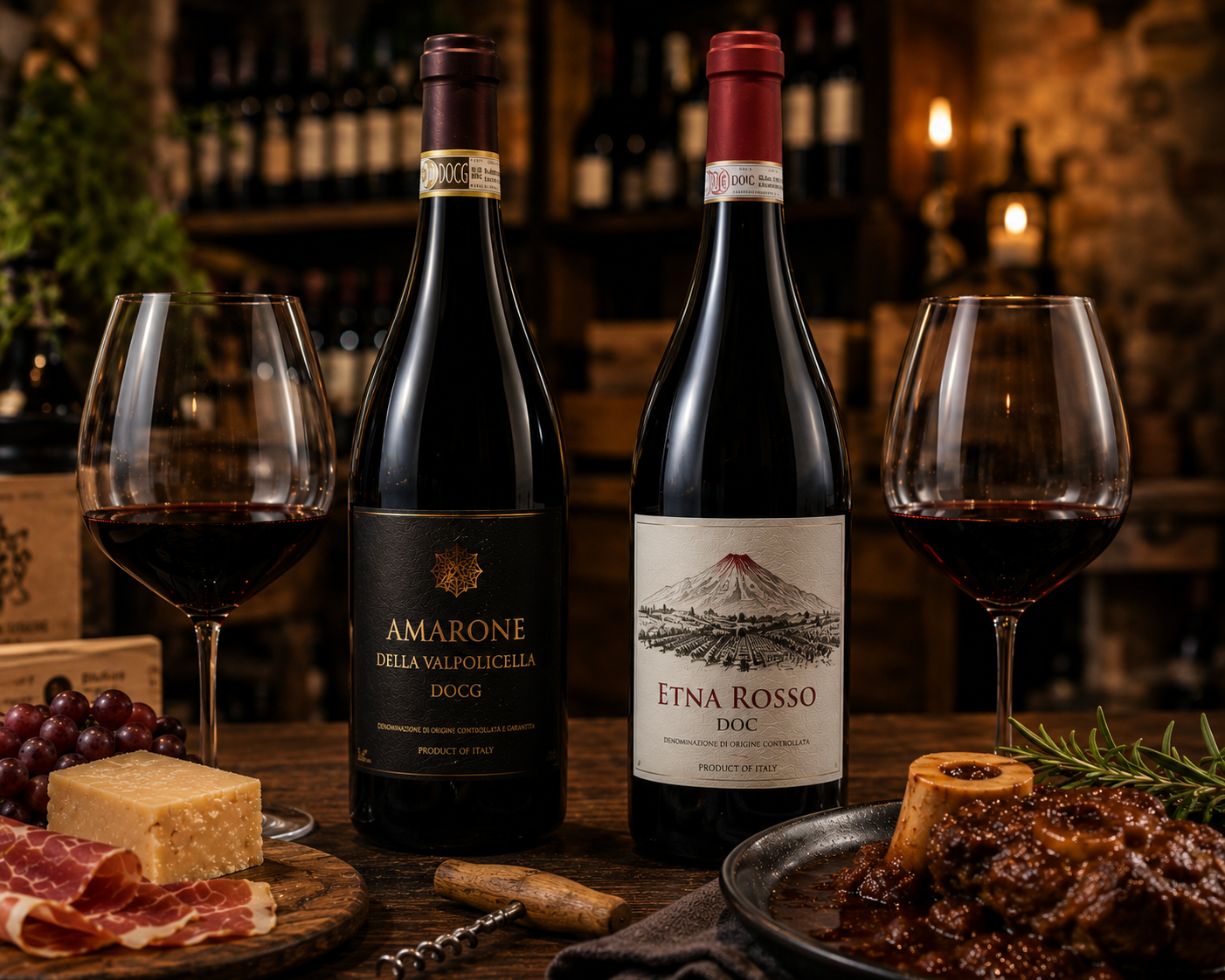
Amarone della Valpolicella and Primitivo di Manduria: appassimento concentration from Veneto meets Mediterranean ripeness from Puglia.
Amarone della Valpolicella and Primitivo di Manduria are two of Italy’s richest red-wine expressions, yet their apparent similarities can be misleading. Both can deliver high alcohol, ripe fruit, substantial body, warmth, and an immediately generous palate. The crucial difference is how that concentration is created. Amarone is shaped decisively by appassimento, the controlled drying of harvested grapes before fermentation. Primitivo di Manduria develops its intensity primarily in the vineyards of Puglia, where abundant sunlight, warm temperatures, maritime influences, and the naturally sugar-accumulating Primitivo grape can produce remarkable ripeness. Amarone is deeper in dried-fruit character and usually more structurally complex. Primitivo is more directly fruit-driven, Mediterranean, and immediately accessible.
The Essential Difference
Amarone is a wine of post-harvest concentration. Primitivo di Manduria is primarily a wine of natural vineyard ripeness. Amarone’s grapes lose water before fermentation, intensifying sugars, flavors, phenolics, and extract. Primitivo generally reaches high sugar levels while still on the vine, creating naturally powerful wines without requiring the same drying process. Amarone often suggests dried cherry, prune, fig, cocoa, tobacco, balsamic notes, and warm spice. Primitivo tends toward blackberry, ripe plum, black cherry, blueberry, licorice, Mediterranean herbs, sweet spice, and sometimes chocolate. Both are generous. Amarone is generally more layered and contemplative. Primitivo is more immediate and fruit-forward.
Veneto vs Puglia
Amarone della Valpolicella is produced in Veneto, north of Verona, within the Valpolicella territory. Hillside vineyards, limestone, marl, clay, elevation, exposition, and localized geological differences influence the grapes before they enter appassimento. Primitivo di Manduria belongs to Puglia, particularly the territory around Manduria and neighboring areas of the Salento peninsula. Here the environment is unmistakably Mediterranean. Intense sunlight, warm summers, relatively limited rainfall, cooling breezes from the surrounding seas, and soils that can include limestone, clay, and the region’s distinctive iron-rich red earth contribute to the grape’s personality. Amarone combines northern Italian terroir with an extraordinary cellar technique. Primitivo reflects southern Italian sunlight much more directly.
The Grapes
Amarone is principally associated with Corvina Veronese, Corvinone, Rondinella, and other permitted local grapes. Corvina contributes cherry fruit, perfume, acidity, and finesse. Corvinone can contribute greater body and darker fruit. Rondinella performs particularly well during drying and supports the traditional blend. Primitivo di Manduria centers on Primitivo, one of southern Italy’s most recognizable red varieties. The grape ripens early, which is reflected in its name, and it can accumulate substantial sugar while developing intense fruit flavors. Primitivo is genetically connected to Zinfandel, but a serious Primitivo di Manduria should be understood through Puglia rather than California. Climate, soils, vine age, vineyard training, yields, harvest decisions, and regional traditions create its identity.
Appassimento vs Mediterranean Ripeness
The technical distinction begins before fermentation. For Amarone, carefully selected grapes remain intact after harvest and are placed in drying facilities. Water gradually evaporates and the remaining juice becomes increasingly concentrated. For Primitivo, much of the concentration develops naturally in the vineyard. Excessive maturity can cause the wine to lose acidity, become overly alcoholic, and taste jammy. The best Primitivo producers seek complete phenolic maturity, deep fruit, sufficient acidity, controlled alcohol, and enough savory complexity to prevent the wine from becoming one-dimensional.
Aromatic Profile of Amarone
Amarone commonly offers black cherry, dried cherry, plum, prune, dried fig, blackberry, raisin, cocoa, cinnamon, clove, tobacco, leather, dried herbs, coffee, and balsamic complexity. Oak maturation can introduce cedar, vanilla, toast, chocolate, and additional spice, although these characteristics should never dominate the wine. With bottle age, great Amarone can become increasingly complex as fruit becomes less primary and tobacco, leather, dried herbs, cocoa, forest floor, coffee, and balsamic notes emerge.
Aromatic Profile of Primitivo di Manduria
Primitivo di Manduria usually begins with ripe fruit: blackberry, black cherry, plum, blueberry, raspberry preserves, and occasionally dried fruit. Secondary characteristics can include black pepper, licorice, Mediterranean herbs, cocoa, vanilla, tobacco, and sweet spices. More traditionally styled examples may show greater earthiness, dried herbs, and savory character. A good Primitivo should retain definition underneath the fruit. When every aroma simply communicates sweetness and ripeness, regional personality disappears.
Body, Tannins and Acidity
Both wines can be full-bodied, but Amarone generally possesses greater structural breadth. Appassimento, alcohol, glycerol, extract, tannin, and concentrated flavor give Amarone an enveloping texture. Primitivo can also feel rich and substantial, but its texture is usually softer and more immediately fruit-driven. Neither wine is defined primarily by aggressive tannin, yet both need sufficient structure. Acidity is essential: Amarone requires freshness because appassimento creates extraordinary richness, while Primitivo needs it to balance Puglia’s natural ripeness.
Alcohol and Perceived Sweetness
Both wines can reach substantial alcohol. Amarone naturally develops high alcohol because drying concentrates grape sugars before fermentation. Primitivo can also accumulate high sugar naturally under Puglian sunshine. In either wine, the objective is equilibrium rather than the highest alcohol percentage. Both can taste sweeter than they technically are. Amarone’s dried fruit, glycerol, concentration, and alcohol can create a sweet impression despite a dry finish, while Primitivo’s ripe blackberry, plum, and black-cherry character can create the same effect.
Which Wine Feels Richer?
Amarone normally wins. Primitivo can be extraordinarily opulent, but Amarone combines concentrated fruit with the textural transformation created by appassimento. This produces a broader and more layered experience. Primitivo’s richness feels more directly fruity. Amarone’s richness feels more multidimensional.
Aging Potential
Top Amarone has an exceptional reputation for long-term aging and can develop for decades. Its concentration, alcohol, acidity, tannin, extract, and complex aromatic material provide strong foundations for extended cellar development. Serious Primitivo di Manduria can also age successfully, particularly wines from old vines and lower-yielding vineyards, although its typical aging horizon is generally shorter. With age, Primitivo can move from fresh blackberry and plum toward dried fruit, tobacco, leather, herbs, cocoa, spice, and balsamic tones.
Old Vines and Primitivo
Old vines can be especially important in Puglia. Traditional bush-trained vines with deep root systems and naturally reduced yields can produce concentrated grapes without relying exclusively on extreme ripeness. These vineyards can create Primitivo with greater complexity, savory depth, and structural balance. Old vines are not automatically superior, but when vineyard health and farming are excellent, they can produce wines of exceptional regional character.
Traditional vs Modern Styles
Amarone ranges from restrained, savory, structurally focused interpretations to extremely rich, polished wines with more visible oak. Primitivo shows an equally important divide. Modern examples can emphasize ripe fruit, softness, chocolate, vanilla, and immediate drinkability. More restrained examples preserve herbs, earth, acidity, and regional character beneath the fruit. Neither approach is automatically better. Balance is decisive.
Decanting and Serving Temperature
Young Amarone generally benefits from one to two hours of aeration. Particularly concentrated bottles can require longer. Primitivo normally requires less, with thirty minutes to one hour usually sufficient. Amarone performs well around 60–65°F (16–18°C), while Primitivo di Manduria is often excellent around 59–64°F (15–18°C). Serving either wine too warm magnifies alcohol and makes fruit seem heavier.
Food Pairing With Amarone
Amarone needs dishes with significant concentration. Slow cooking, reduction, game, collagen, mushrooms, mature cheese, and roasted flavors are natural partners. Guancia di Cervo Brasata all’Amarone works exceptionally well because the intensity of braised game can stand beside the wine rather than disappearing beneath it. Brasato d’Anatra all’Amarone uses the same principle with rich duck, reduction, fruit, and spice.
Food Pairing With Primitivo di Manduria
Primitivo is particularly effective with grilled meats, pork, lamb, sausage, tomato-based meat sauces, smoky foods, and mature cheeses. Orecchiette con Cime di Rapa e Salsiccia Fresca provides an excellent example: sausage gives sufficient fat and intensity, while the bitterness of the greens prevents the pairing from becoming excessively rich. Salsiccia Toscana alla Griglia works because char, pork fat, fennel, and seasoning complement Primitivo’s ripe fruit and spice. Agnello Arrosto alle Erbe gives the wine enough protein and roasted flavor while Mediterranean herbs connect naturally to its regional aromatic profile. Ragù di Cinghiale gives Primitivo the intensity it needs while its generous fruit softens the game character. Cavatelli con Salsiccia e Funghi Porcini combines pork, porcini, pasta, and savory depth with enough richness to support a substantial Primitivo.
Which Is Better With Grilled Meat?
Primitivo di Manduria generally wins. Its ripe fruit, moderate tannins, spice, and Mediterranean warmth work particularly well with the caramelization and smoke created by grilling. Amarone can work with grilled meat, but it often feels more convincing beside preparations with greater sauce concentration or longer cooking.
Which Is Better With Braised Meat?
Amarone has the advantage. Long cooking produces gelatin, reduction, sweetness from browned vegetables, and extraordinary savory concentration. These characteristics match Amarone’s broad texture and dried-fruit complexity exceptionally well.
Which Is Better With Sausage?
Primitivo wins. The combination of pork fat, fennel, black pepper, herbs, smoke, and browned meat is almost naturally designed for the grape. Orecchiette con Cime di Rapa e Salsiccia Fresca demonstrates why the pairing works so effectively.
Which Is Better With Lamb?
Both can be excellent. Primitivo is particularly successful with grilled and roasted lamb where rosemary, garlic, smoke, and herbs dominate. Amarone becomes more appropriate when lamb is slowly braised and served with a concentrated reduction. The preparation method determines the winner.
Which Is Better With Pasta and Cheese?
Primitivo is clearly more versatile with pasta. A substantial Primitivo can accompany sausage ragù, wild-boar ragù, mushrooms, baked pasta, and tomato-based meat sauces without overwhelming the dish. Amarone should generally be reserved for extremely concentrated pasta preparations. With cheese, Amarone works exceptionally well with long-aged Parmigiano Reggiano, mature Pecorino, and intense hard cheeses, while Primitivo pairs beautifully with Caciocavallo, aged Pecorino, and firm southern Italian cheeses where saltiness contrasts with the wine’s ripe fruit.
Power, Elegance and Versatility
Amarone normally wins in sheer concentration, body, glycerol, and structural weight. Primitivo can have comparable alcoholic warmth but generally feels softer. Great Amarone probably has the higher ceiling for complexity and refinement, but only when its enormous concentration is controlled. Primitivo can also be elegant when producers resist excessive ripeness and oak. At the table, Primitivo di Manduria wins for versatility because it can accompany grilled beef, lamb, pork, sausage, pasta, tomato sauces, mushrooms, game, and aged cheeses. Amarone is extraordinary with the right dish but considerably more specialized.
Value for Money
Primitivo di Manduria can offer outstanding value. Quality bottles can deliver considerable concentration, regional character, and immediate pleasure at prices below many prestigious northern Italian reds. Amarone is inherently expensive to make. Drying reduces usable juice volume while increasing the need for labor, space, careful selection, monitoring, maturation, and capital. Its price therefore reflects not only reputation but also an unusually demanding production process.
For the Collector
Amarone remains the stronger choice for collectors seeking long-term development and complex tertiary evolution. Primitivo belongs in a serious cellar for another reason. Great bottles show how Puglia can create powerful wines without sacrificing regional identity. A cellar containing only Italy’s most famous northern denominations misses an important part of the country’s viticultural story.
Wine Pairing and Wine Guides for This Comparison
For a deeper understanding of how each wine works at the table, these dedicated guides explain their structure, regional identity, and strongest food-pairing directions.
Wine Pairing: Amarone della Valpolicella DOCG — Amarone’s concentrated dried fruit, alcohol, broad texture, and savory depth make it best with braised meats, game, mushrooms, long reductions, and mature cheeses capable of matching its extraordinary intensity.
Primitivo di Manduria Wine Guide — Primitivo’s ripe black fruit, Mediterranean warmth, spice, and generous texture make it particularly successful with grilled meats, lamb, sausage, tomato-based meat sauces, aged cheeses, and rustic southern Italian preparations.
Final Verdict
Choose Amarone della Valpolicella if you want dried fruit, appassimento complexity, enormous concentration, broad texture, warmth, spice, and serious long-term aging potential. Choose Primitivo di Manduria if you want ripe blackberry and plum, Mediterranean warmth, generous fruit, softer structure, immediate accessibility, and greater versatility around grilled and rustic food. Amarone is the more complex and structurally ambitious wine. Primitivo is the more direct and gastronomically relaxed wine. Amarone transforms grapes through appassimento. Primitivo transforms Puglia’s sun, soil, old vines, and Mediterranean climate into naturally generous fruit. Both demonstrate Italian richness, but they reach that richness by completely different roads.



Comments