
Polpo in Pignata (Apulian Slow-Braised Octopus in Terracotta)
- Aug 3
- 4 min read
Updated: 23 hours ago
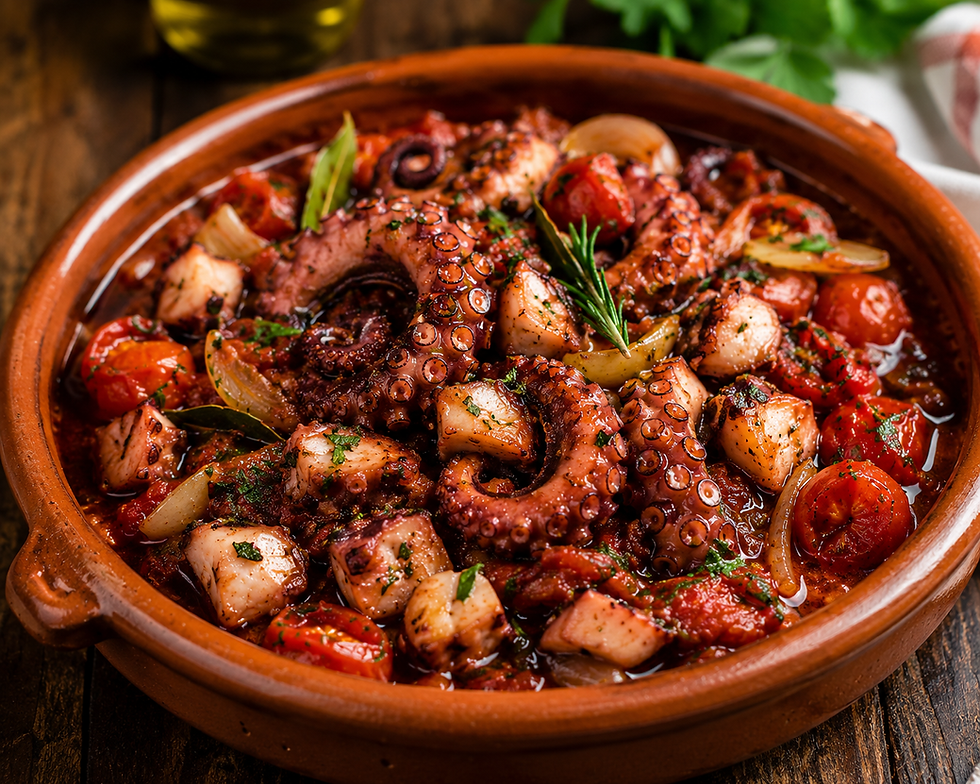
Polpo in Pignata
Story of the Dish
Region: Puglia (Bari & Salento)
Servings: 4
Prep Time: 20 minutes
Cook Time: 1 hour 30 minutes
Polpo in Pignata is one of Puglia's oldest and most beloved seafood dishes, originating along the Adriatic and Ionian coasts where octopus has been a staple of local fishermen for centuries. The name comes from the "pignata," a traditional terracotta pot used throughout Southern Italy for slow cooking over a gentle flame.
In the fishing villages of Gallipoli, Otranto, Monopoli, and Bari, families traditionally prepared this dish using freshly caught octopus, ripe tomatoes, onions, garlic, white wine, and aromatic herbs. The porous terracotta distributes heat evenly, allowing the octopus to braise slowly in its own natural juices until incredibly tender.
Unlike recipes that require boiling, Polpo in Pignata relies on slow, gentle cooking, which concentrates the sweetness of the octopus while producing a rich, velvety sauce. Traditionally, it is served with toasted rustic bread to soak up every drop of the flavorful broth.
Today, it remains one of Puglia's signature seafood specialties and is found in both humble seaside trattorias and Michelin-starred restaurants that reinterpret this timeless classic.
Recipe Information
Region: Puglia (Bari & Salento)
Servings: 4
Prep Time: 20 minutes
Cook Time: 1 hour 30 minutes
Difficulty: Intermediate
Total Time: About 50 minutes
Ingredients
For the Octopus
2½ lb whole octopus, cleaned
3 tbsp extra virgin olive oil
1 large yellow onion, thinly sliced
4 garlic cloves, lightly crushed
1½ cups San Marzano tomatoes, crushed
1 cup cherry tomatoes, halved
½ cup dry white wine
2 bay leaves
1 sprig fresh rosemary
4 sprigs fresh thyme
1 tsp dried oregano
½ tsp crushed red pepper flakes
Sea salt, to taste
Freshly ground black pepper
To Finish
¼ cup chopped Italian parsley
Zest of ½ lemon
Premium extra virgin olive oil
Preparation
Step 1 – Prepare the Octopus
Rinse the octopus thoroughly under cold water.
Pat dry with paper towels.
If large, separate the tentacles and cut the body into large pieces.
Step 2 – Build the Aromatic Base
In a traditional terracotta pignata (or a heavy Dutch oven if unavailable), heat the olive oil over medium-low heat.
Add:
onion
garlic
Cook gently for 8–10 minutes until soft and translucent without browning.
Step 3 – Add the Herbs
Stir in:
rosemary
thyme
bay leaves
oregano
red pepper flakes
Cook for 1 minute until fragrant.
Step 4 – Deglaze
Pour in the white wine.
Allow it to reduce by half, about 3–4 minutes.
Step 5 – Add Tomatoes
Add:
crushed San Marzano tomatoes
cherry tomatoes
Season lightly with salt and pepper.
Bring to a gentle simmer.
Step 6 – Cook the Octopus
Nestle the octopus into the sauce.
Cover tightly.
Reduce the heat to the lowest possible setting.
Cook gently for 75–90 minutes, turning the octopus every 20 minutes.
Do not add water—the octopus will release enough liquid to create a rich, naturally concentrated sauce.
The octopus is ready when a knife slides easily through the thickest part of a tentacle.
Step 7 – Reduce the Sauce
Remove the lid.
Increase the heat slightly.
Allow the sauce to reduce for 10–12 minutes until glossy and concentrated.
Taste and adjust seasoning.
Step 8 – Finish
Remove the rosemary sprig and bay leaves.
Sprinkle with:
chopped parsley
fresh lemon zest
Finish with a generous drizzle of premium extra virgin olive oil.
Professional Technique
Verdicchio dei Castelli di Jesi
Fresh acidity and savory structure keep the pairing balanced.
Vermentino di Gallura
Citrus, herbs, and salinity complement many Italian preparations.
Etna Bianco
Minerality and tension support complex flavors without heaviness.
Chef Tips
If possible, freeze the octopus overnight before cooking to naturally tenderize the meat.
Cooking in terracotta provides exceptionally gentle and even heat, producing the most authentic flavor and texture.
Resist the temptation to add water—traditional Polpo in Pignata cooks entirely in the octopus's own juices.
Allow the finished dish to rest for 15 minutes before serving to deepen the flavors.
This dish is even more flavorful the next day after the ingredients have had time to meld.
Keep the preparation focused on the principal ingredient in Polpo in Pignata (Apulian Slow-Braised Octopus in Terracotta). Taste before final seasoning, control heat carefully, and adjust consistency with cooking liquid or stock rather than unnecessary cream. Prepare garnish and serving plates before the final cooking stage so the dish can be served at its best texture and temperature.
Chef Gianluca’s Recommendation
For a Michelin-style presentation, place a smooth spoonful of slow-reduced tomato sauce in the center of a large white plate. Arrange one beautifully curled octopus tentacle on top with a few roasted cherry tomatoes and caramelized onion petals. Finish with micro parsley, tiny thyme leaves, a few drops of vibrant parsley oil, fresh lemon zest, and a drizzle of exceptional extra virgin olive oil. Serve with a delicate slice of grilled sourdough brushed with olive oil to honor the rustic origins of this elegant Apulian classic.
— Chef Gianluca
For the best result, prioritize ingredient quality and execute the basic technique cleanly before adding decorative touches. The finished recipe should taste balanced first; presentation comes second. Make the final adjustment for salt, acidity, sweetness, or texture immediately before service, then serve without unnecessary delay.
Wine Pairing
Best Choice: Salice Salentino Bianco DOC
Excellent alternatives:
Verdeca IGP Puglia
Fiano Minutolo IGP
Locorotondo DOC
Vermentino di Sardegna DOC
Nutrition per Serving
Calories: approximately 480 kcal
Protein: 1.34 oz
Carbohydrates: 0.78 oz
Fat: 0.88 oz
Saturated Fat: 0.25 oz
Fiber: 0.11 oz
Sugars: 0.14 oz
Sodium: 820 mg
Cholesterol: 145 mg
Approximate nutrition per serving: 460 calories, 1.2 oz protein, 0.99 oz carbohydrates, 0.78 oz fat, 0.18 oz saturated fat, 0.14 oz fiber, 0.18 oz sugars, 720 mg sodium, and 105 mg cholesterol. Values vary with the fish, sauce, and portion size.
Storage and Reheating
Cool leftovers promptly and refrigerate in an airtight container for up to 3 days. Reheat gently with a small amount of stock, water, or sauce as appropriate. Avoid repeated reheating because it damages texture and can dry proteins or overcook starches.



Comments