

Italian Langhe Hazelnut Cake | Torta di Nocciole delle Langhe
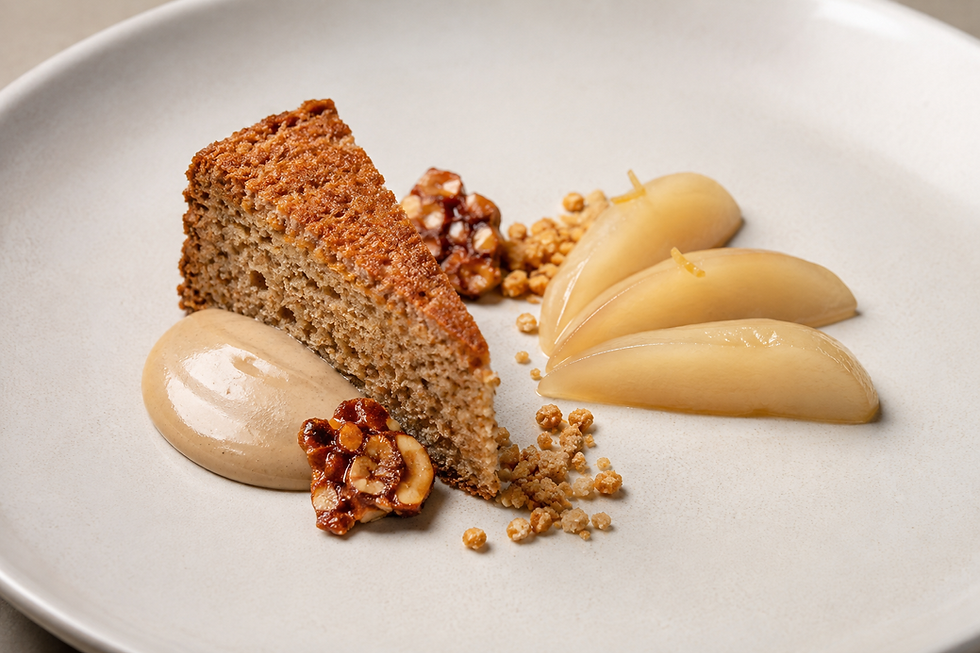
The torta di nocciole of the Langhe contains no wheat flour. Nothing was taken out to please anybody: the recipe was built, long before anyone called it a choice, out of what the hills produced. Nuts, eggs, sugar, salt.
That single absence decides everything. With no gluten there is nothing in this batter to develop, so every minute of mixing past the necessary one costs air and costs height. The cake leaves the tin low, dense and damp, and that is the finished article, not a failure of rising.
Yield: one 9 inch cake, 10 slices. Prep: 30 minutes. Bake: 35 to 40 minutes. Cool: 1 hour. Total: about 2 hours 10 minutes. Difficulty: intermediate. Course: dolce. Region: Piedmont, the Langhe hills around Alba and Cortemilia.
The Story
The Langhe are a run of steep clay and marl hills between Alba and the Ligurian border, and for most of their history they were poor. The vine took the best south facing slopes, the ones that now carry Barolo and Barbaresco. What was left, the cold north sides and the thin ground above the vineyards, went to the hazel. Around Cortemilia, in the upper Bormida valley, whole hillsides carried nothing else, and the nut became the currency of a place with little else to sell.
Wheat grew badly there and was expensive to buy. That is the entire origin of this cake: a household with nuts in the loft and eggs from the yard could make a dolce for a feast day without spending a lira at the mill. The oldest versions recorded in the valley list four things: nuts, sugar, eggs and a pinch of salt. Butter appears in later and richer variants, and so does a spoonful of flour, but both are additions to something that never needed them. The nut was the grain.
The cake belonged to the calendar rather than to the everyday. It was baked for a patron saint's day, a wedding, the end of the harvest, and in quantity because it kept. That point matters more than it sounds. A cake made without flour holds its moisture for days instead of going stale, so a woman could bake on Friday for a Sunday table with three or four hours of other work in between, which is exactly what a farming household needed.
Today Cortemilia holds a protected designation for its nuts and a festival every autumn, and the torta is sold in every pastry shop in the Langhe. Most of it has been modernised: flour, butter, baking powder, a taller crumb. The old version is the better cake and the easier one, because there is almost nothing in it to get wrong once you understand what the missing flour is doing.
Ingredients
For the nut base
Shelled hazelnuts, 2 1/2 cups, 10 oz (285 g)
Granulated sugar, 2 tbsp (25 g), for grinding with the nuts
Fine sea salt, 1/4 tsp (1.5 g)
For the batter
Eggs, large, separated, 4
Granulated sugar, 3/4 cup (150 g), for the yolks
Granulated sugar, 2 tbsp (25 g), for the whites
Mild honey, acacia for preference, 1 tbsp (20 g)
Dark rum, 1 tbsp (15 ml), optional
Pure vanilla extract, 1 tsp (5 ml)
For the tin and the finish
Unsalted butter, softened, 1 tbsp (14 g), for the tin only
Hazelnuts, whole, 2 tbsp, for the tin base
Confectioners sugar, 1 to 2 tsp, for dusting at the table
Nothing else goes in. No wheat flour, no starch, no baking powder, and adding any of them makes a different cake. Use nuts from this year, since a nut that has sat through a warm summer carries a stale note four ingredients cannot hide.
Preparation
Toasting the nuts and rubbing off the skins
Heat the oven to 325°F (165°C). Spread the hazelnuts in one layer on a tray and give them 10 to 12 minutes, shaking once. Tip them hot onto a clean tea towel, gather it into a bundle and rub firmly for a minute. Pick the nuts out, leaving the skin behind, and cool them completely. Warm nuts will not grind properly.
Grinding the nuts fine but never to a paste
Set aside the 2 tablespoons of whole nuts for the tin. Put the rest in a processor with the 2 tablespoons of sugar and the salt and work in pulses of two or three seconds, scraping the sides between them. The sugar acts as an abrasive and stops the meal caking. Aim for coarse cornmeal, dry and free running, and stop there. Run the machine continuously and the nuts pass from meal to butter in seconds.
Whipping the yolks to the ribbon
Whip the yolks, the 3/4 cup of sugar, the honey, the vanilla and the rum on high speed for 5 to 6 minutes. You want a pale thick foam that falls off the whisk in a slow ribbon and sits on the surface for two seconds before sinking. This foam is the only structure the cake has apart from the nuts, and whipped too briefly it bakes flat with a gluey band across the base.
Whipping the whites to a soft peak and stopping there
In a clean dry bowl whip the whites on medium speed until opaque and foaming, then rain in the 2 tablespoons of sugar and continue until the peak holds its shape and droops at the tip. Stop there. A stiff dry white breaks into lumps in a heavy nut batter instead of folding through it, and every lump is air that never distributes.
Folding the nuts into the yolk base
Add the ground nuts in three additions, folding each with a large flexible spatula: cut down through the middle, sweep the bottom of the bowl and turn the mass over on itself, rotating the bowl a quarter turn between strokes. Keep the strokes wide and slow and count them. Thirty should see the nuts in. Nothing improves with more mixing, and extra strokes only flatten the foam.
Folding in the whites
Stir a quarter of the whites into the nut batter without any care, simply to loosen it, then fold the rest in two additions and stop the moment the last streak disappears. The batter should be thick, fluid enough to level itself slowly, and visibly full of air. If it pours easily the foam is gone and the cake will bake wet.
Filling the tin and baking
Butter a 9 inch (23 cm) round tin and line the base with parchment. Scatter the reserved whole nuts over it, which gives the turned out cake a top. Pour in the batter, tap the tin once on the counter and bake at 325°F (165°C) for 35 to 40 minutes in the middle of the oven, door shut for the first 25.
Judging doneness and cooling in the tin
The cake is ready when the top is a deep even brown, has domed slightly and lost its shine, and springs back when pressed. A skewer should come out with a few damp crumbs: a clean skewer means two minutes too long. Expect a rise of no more than an inch and a half. Cool it in the tin on a rack for 1 hour, since the crumb is fragile while warm and sets as it cools.
Plating
Turn the cake out upside down so the whole nuts from the tin base become the top, peel off the parchment and leave it on the plate as it is. It is a flat, dark, honest cake and should not be dressed up: no glaze, no piped cream, no cocoa.
Cut it with a thin knife wiped between slices and serve at room temperature, never chilled. Ten slices from a 9 inch round is right, because a wide wedge of so rich a crumb defeats people. Dust with confectioners sugar at the table, not in the kitchen: the damp surface absorbs it within minutes and the cake arrives grey.
In the Langhe it goes out with a glass of sweet wine and nothing else. Barely sweetened whipped cream or a few raspberries work beside it, adding moisture and acidity without competing. Warm zabaione poured over the slice is the traditional partner worth the trouble.
Professional Technique
The technique follows from one fact: no wheat flour means no gluten, which means no network is being built. In an ordinary batter, mixing does constructive work: flour proteins hydrate and link, and a certain amount of beating is needed before the batter can hold a bubble at all. Here that mechanism does not exist. The structure is an egg foam reinforced by nut particles and set by the oven. Every stroke after the ingredients are combined subtracts from it and adds nothing, which is why you count folds and stop.
The second consequence is height. A gluten network stretches and holds as steam expands inside it, which is how a sponge climbs a tin and stays there. A nut and egg foam has no such elasticity: it expands modestly, then sets where it is. A well made torta di nocciole rises about an inch and a half and may sink a little in the centre. Chasing a taller cake with baking powder gives a coarse dry crumb that tastes of less, because the same nut and egg is stretched over more volume.
The third is the grind, and it separates a good cake from a heavy one. Ground fine, the nut particles act as an inert filler that traps and divides the foam, and the crumb reads as smooth. Ground too far, the cell walls rupture, the nut releases its oil and the meal turns to butter. That free oil coats the egg proteins so the foam holds nothing: the batter goes slack and the cake bakes into a greasy slab. Dry and slightly coarse is recoverable. Oily is not.
Texture and Moisture Control
The target texture is damp and close grained, between a cake and a soft nut biscuit, tender enough to break under a fork without crumbling. Nut fat rather than butter does the work, and it stays soft across a wide temperature range, which is why the cake tastes moist warm and of almost nothing cold.
Oven management is where the moisture is won or lost. At 325°F (165°C) the surface browns while the middle is still setting, which is what you want. Push to 350°F (175°C) and the crust forms early, seals, then cracks as the inside expands, leaving the cake dry at the rim and raw in the middle. Bake cooler and the foam collapses before the proteins set. The window is narrow.
Then leave it alone. This cake improves for two days on the counter, the reward for having no flour in it: with almost no starch present there is no staling in the usual sense. Moisture migrates outward until the whole slice reads the same, and the nut flavour, muted on the first day, comes forward on the second. Keep it whole under a dome and it is at its best on day two and three.
Professional Mise en Place
Two moments cannot be paused: the fold and the transfer to the oven. Have the tin lined and the oven at temperature before the whites are touched.
Equipment and tools
Food processor with a sharp blade, for pulsing the nuts
Stand mixer or hand mixer, plus a second clean bowl for the whites
Large flexible spatula for folding
9 inch (23 cm) round tin, parchment, oven thermometer
Clean tea towel for rubbing the skins off
Prepared ahead
Nuts toasted, skinned and cooled, up to 2 days ahead in a sealed jar
Nuts ground with the sugar, up to 4 hours ahead, covered and cool
Tin buttered, lined, whole nuts scattered over the parchment
Eggs separated and at room temperature, about 30 minutes out
Oven at 325°F (165°C), verified with a thermometer
Service setup
Cake baked in the morning for evening service, left whole on the counter
Serving plate, thin knife, hot water for wiping the blade
Confectioners sugar in a sieve, dusted as the plate goes out
Chef Tips
Weigh the nuts after skinning, not before. Skins and discards are a real loss, and a batter short of nut meal bakes closer to a flat omelette. Buy 12 oz (340 g) to be sure of 10 oz (285 g).
If the ground nuts look damp or start clumping on the side of the bowl, stop and tip everything out. Work a tablespoon of the yolk sugar through with your fingertips: it absorbs the free oil and the meal becomes usable again. Keep pulsing and it will not.
Do not open the oven for the first 25 minutes. No elastic network is holding this foam up, so a draught of cool air at minute 15 drops the centre and it does not recover. After 25 minutes a quick look costs nothing.
Bake it the day before you need it. A torta served the same afternoon is a lesser version of what it will be at lunch tomorrow.
Common Mistakes
Grinding the nuts to butter. The fatal error. Once the oil is out the foam cannot hold and the cake bakes flat and greasy. Pulse in bursts of two or three seconds with sugar in the bowl and stop while the meal looks dry.
Beating the batter once the nuts are in. There is no gluten to develop, so mixing can only destroy air. Fold in wide slow strokes and stop when the streaks disappear, not later for neatness.
Adding flour or baking powder to make it rise. It will rise and it will be a worse cake: coarser, drier and less nutty, because the same nut and egg is spread thinner. A low cake is correct here.
Whipping the whites stiff. Dry whites break into lumps in a heavy nut batter instead of folding through, and the air stays locked in them. Soft peak that droops at the tip, no further.
Baking hotter to save time. At 350°F (175°C) the crust sets before the centre, then splits as the inside expands. Hold 325°F (165°C) for the full 35 to 40 minutes.
Wine Pairing
Moscato d'Asti DOCG: The pairing the Langhe itself would pour, from the same hills a valley or two west. Its low alcohol and gentle sparkle scrub the nut fat off the palate between bites, which no still sweet wine can do, and the sugar sits just above the cake rather than burying it. Peach and orange blossom read as a fresh top note over a toasted flavour.
Brachetto d'Acqui DOCG: A sweet lightly sparkling red from Acqui Terme, the next valley from the hazel groves of Cortemilia, so the geography is exact. Its small tannin gives a grip no white dessert wine has, and that grip cuts the richness of four yolks. Strawberry and rose against a plain brown nut cake is the contrast that makes both halves taste louder.
Moscato di Scanzo DOCG: A dried grape sweet red from a tiny zone near Bergamo, the most interesting bottle here. Drying builds a fig, walnut and bitter almond character that runs alongside the nut rather than against it, with enough acidity underneath to keep a rich slice from feeling heavy.
Vin Santo del Chianti Classico DOC: Leaves Piedmont but earns its place on flavour logic. Years in small barrels under a warm roof give an oxidative profile of dried apricot, caramel and roasted nut already halfway to the cake. Its acidity is high for a sweet wine, which keeps the match from cloying, and the resinous finish answers the bitterness of the nut skins.
Recioto di Soave DOCG: For anyone who finds Moscato too floral and Vin Santo too heavy. Garganega dried on the vine keeps a firm mineral acidity that this cake, which has none of its own, badly wants. The flavours run to candied citrus peel, quince and almond, and the texture is silky without weight.
Storage & Reheating
Keep the cake whole at cool room temperature under a dome or loosely in parchment and it holds 4 days, improving on the second and third. Do not put plastic wrap against the surface, which traps moisture and turns the top tacky. Once cut, press parchment against the cut face.
Refrigeration is for a hot kitchen only. Cold hardens the nut fat, mutes the flavour and makes the crumb feel dry although it has lost no water. If you must, wrap it well and bring it back to room temperature for 2 hours.
It freezes very well, the other quiet advantage of a flourless cake. Wrap the cooled cake in parchment then foil and freeze up to 3 months, whole or sliced, and thaw wrapped at room temperature for 3 hours. No reheating is wanted, though 5 minutes uncovered at 300°F (150°C) brings the aroma back to a frozen slice.
Nutrition
Per slice, based on 10 slices from one 9 inch cake:
Calories: 320 kcal
Total Fat: 21 g
Saturated Fat: 2.5 g
Trans Fat: 0 g
Unsaturated Fat: 18 g
Cholesterol: 76 mg
Sodium: 85 mg
Total Carbohydrates: 26 g
Fiber: 3 g
Total Sugars: 22 g
Added Sugars: 20 g
Protein: 7 g
Lactose: 0 g
Principal micronutrients: vitamin E, manganese, copper, magnesium, thiamine, folate
These figures are estimates and shift with egg size and the fat content of the nuts. The cake contains no wheat, and the only dairy is the butter for the tin.


Comments