
The Mafia at the Table: Inside Italy’s €25.2 Billion Agromafia Economy / La Mafia a Tavola: dentro l’economia criminale da 25,2 miliardi di euro
Updated: Aug 28
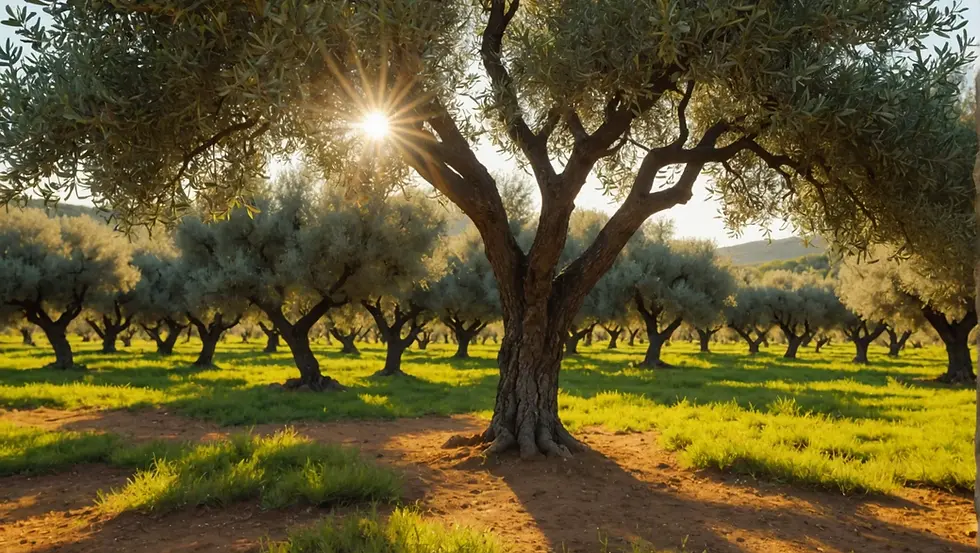
Italy sells the world an extraordinary idea of food. Vineyards climbing hillsides, olive groves shaped by centuries of cultivation, Parmigiano Reggiano aging in Emilia-Romagna, tomatoes ripening under the southern sun, fishermen returning at dawn, small family farms, regional recipes, protected denominations, markets, trattorias and restaurants whose identities are inseparable from the territories that created them. But behind this celebrated image exists another food economy. It does not appear on labels, it does not advertise itself, and it has very little to do with cuisine.
It is the economy of the agromafias: the penetration of organized crime and criminal networks into agriculture, food production, transportation, labor, wholesale markets, retail, restaurants, public subsidies, land ownership, finance and increasingly digital commerce. According to the 8th Agromafie Report released in 2025 by Eurispes, Coldiretti and the Fondazione Osservatorio sulla criminalità nell’agricoltura e sul sistema agroalimentare, the estimated business connected with agromafias in Italy reached approximately €25.2 billion. That figure matters because it changes the scale of the conversation. This is not a story about a few counterfeit bottles or a handful of fraudulent labels. It is an economic system measured in tens of billions.
The modern mafia does not need to stand outside a restaurant demanding an envelope of cash. It can buy the restaurant. It does not need to intimidate every farmer in a territory. It can finance the farmer who can no longer obtain credit. It does not need to steal every agricultural product. It can control the company transporting it. It does not need to manufacture counterfeit food itself. It can control the commercial network through which fraudulent products reach consumers. And it does not necessarily need violence to acquire an enterprise. Sometimes liquidity is enough. The old mafia imposed itself visibly. The modern mafia increasingly seeks to become economically invisible.
What Agromafia Really Means
The word agromafia is powerful, but it must be used carefully. Not every food fraud is mafia. Not every case of illegal labor is mafia. Not every counterfeit Italian product is mafia. Not every restaurant involved in financial crime is controlled by a traditional mafia organization. Caporalato can exist without mafia involvement; a dishonest exporter can falsify origin without belonging to Cosa Nostra, the Camorra or the ’Ndrangheta; and an ordinary company can violate food regulations without being part of organized crime. A serious investigation has to keep these distinctions clear.
Agromafia describes the intersection between criminal power and the agricultural and food economy. It can include illegal labor recruitment, counterfeit products, manipulation of origin, food adulteration, fraudulent certifications, control of transportation, usury, misuse of subsidies, acquisition of distressed companies, theft, cybercrime and money laundering. Food gives criminal organizations something much larger than an opportunity to sell fake products. It gives them an ecosystem: land, workers, warehouses, trucks, restaurants, supermarkets, invoices, real estate, public money, international trade and above all economic legitimacy.
Once criminal capital enters legitimate commerce, distinguishing the illegal economy from the legal one becomes harder. A field can continue producing wheat. A dairy can continue making cheese. A restaurant can continue serving customers. A logistics company can continue delivering produce. The commercial activity can be real while the ownership, financing or strategic control behind it is compromised. This is why the central investigative question is often not whether a tomato is genuine, but who controls the money behind the company that grew, moved or sold it.
From Extortion to Ownership
For decades the public image of mafia economic power was dominated by extortion. A businessman opened a shop, a criminal intermediary demanded payment, and the business paid in order to continue operating. That model has not disappeared, but ownership can be more powerful than extortion. If a criminal organization takes a monthly payment from a restaurant, it profits from the restaurant. If it owns the restaurant, owns the building, controls suppliers and uses the enterprise to move money, it controls an economic asset.
Extortion operates outside the company. Investment enters it. Once criminal capital becomes embedded in legitimate businesses, it can reproduce itself through ordinary transactions. One company buys from another. Another provides transport. Another owns the commercial property. Another supplies construction work. Another manages agricultural land. Each transaction may look ordinary in isolation. Together they can form a network that behaves like a holding company. The objective is no longer simply cash; it is control, influence, access and the ability to convert illicit liquidity into long-term assets.
Why Food Is So Attractive to Organized Crime
Food possesses characteristics that make it unusually attractive to criminal capital. Demand never disappears. Consumers can delay buying a car or replacing furniture, but they cannot stop eating. The sector is also fragmented. Between a field and a restaurant plate can stand farmers, labor intermediaries, transporters, packing companies, processors, slaughterhouses, dairies, mills, warehouses, wholesalers, importers, exporters, supermarkets and restaurants. Every transition creates an economic transaction, and every transaction creates an opportunity for legitimate profit or illicit manipulation.
Perishability increases leverage. A producer of dry pasta can wait longer for a different carrier than a farmer holding ripe strawberries. Fresh fish cannot remain in a truck indefinitely. Mozzarella needs a controlled cold chain. Whoever controls movement and market access can therefore gain power over producers. Food also combines low-cost physical commodities with high-value identities. A generic hard cheese and Parmigiano Reggiano are not priced the same. A generic wine and a prestigious denomination are not priced the same. A cheap oil and genuine premium Italian extra virgin olive oil are not priced the same. Changing information can change value without changing the physical product very much.
The €25.2 Billion Criminal Economy
The estimate of €25.2 billion should be interpreted with precision. It is not an audited balance sheet showing every criminal euro. Hidden economies cannot be measured with the same precision as public companies. The number is an estimate derived from investigative evidence, economic analysis and observed patterns. What matters most is scale and direction. The estimated business has grown dramatically over little more than a decade, demonstrating that organized crime has not abandoned agriculture and food. It has diversified within them.
The modern criminal food economy can involve traditional theft and extortion, but it can also involve corporate structures, sophisticated financing, digital fraud, subsidy manipulation, cross-border trade and cybercrime. The mafioso of the twenty-first century does not need to reject capitalism. He can study it, understand its rules and exploit its weaknesses. The result is a criminal strategy that becomes less theatrical and more technical.
Land: The Original Source of Power
Land has always mattered because land produces more than food. Historically it represented employment, social hierarchy, water, transport routes, local political relationships and the ability to determine who worked and who earned. In parts of southern Italy, mafia power developed in environments where intermediaries controlled access between estates, workers, merchants and institutions. Modern agriculture is radically different, but land remains strategic. Farmland can produce crops, appreciate in value, qualify for public support, host agritourism, provide access to water and become attractive for renewable-energy projects.
For organized crime, agricultural property can therefore be both a productive business and a store of wealth. The most sophisticated acquisition does not necessarily begin with a threat. It can begin with a debt. A farmer facing several bad seasons may need liquidity exactly when banks become more cautious. Criminal money can arrive quickly. What begins as rescue can become dependency, and dependency can become control.

The Farmer in Financial Trouble
Agriculture is exposed to risks that consumers rarely see. Fuel prices change, fertilizer prices change, feed costs rise, interest rates move, drought reduces yields, floods destroy machinery, plant disease attacks crops, livestock disease can eliminate herds, and retailers can pressure wholesale prices downward. A farmer may invest for months before knowing whether the harvest will cover costs. When several shocks arrive together, a valuable farm can become cash-poor.
That is precisely the moment when illegal credit becomes dangerous. A criminal lender can provide money immediately. Interest accumulates. Repayment becomes difficult. The lender may then ask for land, ownership, contracts, supplier access or informal control. The original farmer can remain the public face of the enterprise while effective decision-making moves elsewhere. No dramatic act of violence is necessary. A sequence of signatures can achieve what a threat once achieved.
Usury as an Acquisition Strategy
Usury is usually described as an illegal lending crime, but in organized economic activity it can function as an acquisition strategy. Imagine an agricultural company worth several million euros. It owns land, machinery, contracts and buildings but lacks short-term cash. A criminal organization has the opposite problem: abundant illicit liquidity and a need to convert it into legitimate assets. The financially distressed company and the criminal lender become a dangerous fit.
A loan is made. Debt grows. Bargaining power changes. The borrower becomes dependent. Eventually the lender can demand ownership, influence over suppliers or the transfer of property. Corporate documents may still present a respectable company, yet the financial reality underneath it has changed. This is why modern anti-mafia work increasingly focuses on beneficial ownership, unexplained capital injections, unusual debt repayment and relationships between apparently independent companies.
European Agricultural Funds and Public Money
Agriculture receives substantial public support from European and national programs. Wherever large pools of public money exist, fraud becomes attractive. Sophisticated criminal organizations can be highly capable bureaucratic actors. They study eligibility rules, land registries, subsidy applications, procurement systems and documentation requirements. A fraudulent operation can involve false leases, fictitious agricultural activity, nominees, manipulated records, shell companies or artificial corporate structures designed to appear compliant.
This kind of crime shows why the stereotype of the violent but unsophisticated mafioso is obsolete. Administrative fraud requires knowledge. It requires accountants, consultants, corporate officers and sometimes corrupt intermediaries. The criminal organization may provide capital and coercive power, while white-collar professionals provide the architecture that allows the operation to enter the legal economy.
The White-Collar Infrastructure
Complex economic crime needs professional expertise. Accountants understand balance sheets and corporate structures. Lawyers understand contracts and ownership. Financial advisers understand loans and transfers. Agronomists understand agricultural programs. Consultants understand public procurement. IT specialists understand digital systems. Most professionals operate legally and ethically, but a criminal network needs only a small number willing to assist it.
The result can be a company with real employees, real offices, real invoices, real tax filings, real customers and real goods. The illegal element may be hidden in the financing, beneficial ownership or purpose of transactions. The old mafia concealed people. The modern mafia can conceal capital inside legitimate commerce, making financial analysis as important as traditional police intelligence.
Caporalato: The Human Cost Behind Cheap Food
At the opposite end of sophisticated financial crime stands labor exploitation. Italian agriculture depends heavily on seasonal workers, including many foreign workers. Most farms operate legally, but parts of the sector have faced the persistent problem of caporalato: illegal labor recruitment and exploitation. Workers may be hired through unauthorized intermediaries, transported to fields under degrading conditions, paid below contractual standards, charged for transport or housing and made to work excessive hours.
Caporalato is not automatically mafia, and it is important not to confuse the categories. Individual employers and non-mafia networks can exploit workers. But organized crime can enter when recruitment, transport, territory and economic coercion overlap. The economics are obvious. Labor is a major cost. Reduce it illegally and the final product can be sold at a price legitimate competitors cannot match. The first victim is the worker. The second is the honest producer forced to compete against exploitation.
Who Really Pays for Extremely Cheap Food?
Consumers understandably want affordable food. Yet agricultural production follows physical and economic limits. A tomato requires land, water, labor, fuel, packaging and transport. A dairy product requires animals, feed, veterinary care, energy and refrigeration. A restaurant needs rent, employees, insurance, equipment and ingredients. When prices become structurally lower than the visible cost of production, somebody somewhere is absorbing the missing cost.
Sometimes the explanation is efficiency, technology, scale or a temporary promotion. Sometimes it is illegal labor, tax evasion, fraudulent ingredients, environmental violations, false origin or criminal financing. The consumer sees a discount. The hidden cost can be carried by a worker, a farmer, taxpayers, the environment or legitimate competitors. Cheapness is not proof of crime, but impossible economics should create professional skepticism.
Logistics: The Invisible Power Behind the Plate
Food must move constantly. Milk must reach dairies, vegetables must reach packing facilities and markets, fish must remain cold, meat must stay inside regulated chains, restaurants need deliveries and supermarkets require continuous replenishment. Logistics is therefore a strategic part of the food system even though consumers rarely think about it. Control over trucks, warehouses and distribution routes can create leverage over both producers and buyers.
Perishability makes that leverage stronger. A producer of canned goods can wait longer for a different carrier than a farmer with ripe fruit. Time becomes power. Whoever controls movement can influence who gets market access, when goods arrive and what conditions producers accept. This is why logistics repeatedly appears in analyses of criminal infiltration of agriculture and food.

Wholesale Markets and Commercial Intermediation
Wholesale markets connect large numbers of producers with distributors, restaurants, shops and supermarkets. Intermediaries know who must sell quickly, who has excess inventory, which commodities are scarce, who needs transport and which producer is financially weak. Information itself becomes economic power. A network with influence over market intermediation can shape conditions without ever appearing in front of consumers.
This also creates opportunities for mixing supply chains. Where traceability is weak or deliberately manipulated, products of different origins can enter the same commercial stream. Geography carries value in Italian food. Tuscan, Sicilian, Sardinian, Calabrian, Puglian and Piedmontese identities can command premiums. Changing geography on paper can therefore change price, and that makes origin a target for fraud.
Food Fraud: When Information Becomes Money
Food fraud is powerful because the fraudster often does not need to create a new product. He needs to alter the consumer’s understanding of the product. Origin, quality, species, production method, organic certification, vintage, protected denomination, expiration date and composition all have economic value. A cheaper commodity can become a premium commodity if its identity is changed convincingly enough.
The modern food market depends on information. A consumer in New York cannot personally inspect an olive grove in Puglia or a dairy in Emilia-Romagna. A restaurant buyer cannot visit every vessel, mill, vineyard and warehouse. Labels, invoices, certification and traceability substitute for direct knowledge. Fraud monetizes the distance between producer and buyer.

Olive Oil: Liquid Gold and a Perfect Target
Few products symbolize Italian food more strongly than extra virgin olive oil. High-quality oil is expensive to produce because olive groves require land and maintenance, harvesting is labor-intensive, milling conditions matter, storage matters, weather affects yields and disease can damage production. Genuine premium oil therefore has a real economic floor.
Most consumers, however, cannot determine geographic origin or quality category by taste alone. That creates an incentive for adulteration, blending, misleading origin claims and relabeling. The criminal does not always need to invent oil. He can invent the story around the oil. A cheaper liquid acquires a more expensive identity through information. Traceability and laboratory testing are therefore not bureaucratic decoration; they protect economic truth.
Wine: When Geography Becomes Money
Wine demonstrates even more clearly how information creates value. Two bottles can contain liquids whose raw production costs are not radically different, yet one sells for twenty dollars and another for thousands. Producer, vineyard, vintage, denomination, scarcity, history and provenance create the difference. Those intangible characteristics are financially valuable, which is why counterfeit labels and false documentation can be so profitable.
A fake premium bottle may involve counterfeit labels, reused bottles, forged provenance, manipulated corks or false documentation. International markets increase the opportunity because collectors often buy far from the winery. The farther the customer is from the producer, the greater the dependence on trusted intermediaries. Wine fraud therefore sits at the intersection of food crime, brand crime and international commerce.
Tomatoes: An Ordinary Product with a Complex Supply Chain
A canned tomato looks simple. Its supply chain is not. Production, harvesting, transport, processing, concentration, canning, packaging, warehousing, export, import, wholesale distribution and retail can all occur in different places. Every transition creates documentation. Origin becomes valuable when consumers associate Italian tomatoes with superior quality and are willing to pay more for them.
Imported tomatoes are not inherently inferior and foreign origin is not a crime. Fraud begins when origin is deliberately falsified. The economic opportunity lies in converting a cheaper product into a more expensive one by changing the declared story. The same logic can affect rice, honey, grain, meat, fish and many other commodities.
Cheese and Protected Identity
Parmigiano Reggiano is not simply hard cheese. Mozzarella di Bufala Campana is not simply mozzarella. Pecorino Romano is not simply sheep’s cheese. Protected products represent regulated systems involving territory, raw materials, animal husbandry, processing, aging and certification. Producers accept restrictions and costs in exchange for protection of a collective name.
Counterfeiting steals that accumulated value. The imitator avoids the costs of the protected system while attempting to collect the same premium. The consumer is deceived, but the legitimate producer is also harmed because the reputation built collectively over generations is being monetized by someone who did not create it.
Italian Sounding Is Not Automatically Mafia
Italian Sounding is often confused with criminal counterfeiting, but the categories are different. Italian Sounding broadly describes products marketed with Italian names, flags, colors or imagery even when they have little or no connection with Italy. The phenomenon can be commercially damaging, but some products may be perfectly legal under the laws of the market in which they are sold. Trademark infringement, abuse of protected denominations, fraudulent origin and organized criminal infiltration each require separate analysis.
This distinction protects the credibility of the investigation. If every imitation product is called mafia, the word loses meaning. Serious reporting should identify what is illegal, what is merely controversial and what is demonstrably connected to organized crime.
Restaurants: Where Food Meets Finance
Restaurants occupy a unique position because they combine public visibility with complex financial activity. They buy from many suppliers, hold fluctuating inventory, generate waste, employ large numbers of workers, pay rent, renovate premises and process thousands of customer transactions. For legitimate entrepreneurs, this complexity is simply the reality of the business. For criminal capital, the same complexity can create camouflage.
A criminally financed restaurant does not need to serve bad food. It can have talented chefs, clean kitchens, genuine ingredients and loyal customers. The criminal issue may exist entirely in ownership, financing or relationships with connected companies. This is why looking only at food quality cannot reveal the whole problem.
How Money Laundering Can Use a Restaurant
Money generated through serious crime has a fundamental weakness: it lacks a legitimate explanation. Laundering attempts to create distance between the criminal act and the money. Restaurants naturally generate revenue, pay suppliers, employ staff, receive invoices, make deposits and undertake renovations. Those legitimate flows can be manipulated in more sophisticated laundering structures.
Revenue can be overstated, invoices can be fabricated or inflated, connected businesses can transact with one another, loans can be engineered and real estate can become part of the network. The objective is not always to operate the most profitable restaurant. The business can provide legitimacy, assets, social relationships and a plausible commercial explanation for capital.
The Restaurant That Does Not Need to Make Money
A normal restaurant must eventually make economic sense. Food cost, labor, rent and revenue must align. A business supported by criminal capital may have other objectives and can potentially tolerate losses that would destroy an ordinary competitor. It may accept unusually low margins, remain open despite weak commercial performance, pay unusually high rent or acquire expensive premises.
None of those facts proves criminality. Restaurants fail and owners make irrational decisions every day. But financial investigators ask different questions: where did the acquisition capital come from, who paid for the renovation, who owns the property, who owns the suppliers, whether related companies transact with one another and whether declared revenue corresponds to real activity. The dining room tells one story; the balance sheet may tell another.
Supermarkets and Large-Scale Distribution
Supermarkets provide something restaurants cannot: scale. A retailer purchases enormous quantities, determines shelf access, manages warehouses, negotiates with producers, controls distribution and handles constant financial flows. Influence over retail can therefore create leverage across the entire food chain. A farmer may produce an exceptional product, but without a buyer and distribution the product remains on the farm.
Control the buyer and you influence the supplier. Control the logistics company and you influence the buyer. Control several connected businesses and what appears to be a competitive market can begin to function like a network. Modern criminal strategy can therefore reshape markets rather than simply steal from them.
The Mafia Supply Chain
Imagine a hypothetical structure in which one company owns farmland, another recruits labor, another owns trucks, another operates warehouses, another distributes products, another owns restaurants, another provides construction services and another owns commercial real estate. Each company performs genuine work. Each can employ legitimate workers and issue genuine invoices. Money moves among them through ordinary contracts.
The criminal value lies in the network. Capital remains inside connected enterprises, suppliers reinforce one another, properties appreciate, associates receive legal salaries and illicit money becomes mixed with legitimate profits. The economic system begins to resemble a conventional corporate group. This is one reason sophisticated organized crime can be difficult to identify from the outside.
Respectability Is an Economic Asset
Criminal organizations do not invest in legitimate businesses only for money laundering. Respectability has value. A successful restaurateur meets bankers, developers, politicians, journalists and other entrepreneurs. A supermarket owner employs hundreds of people. A hotelier becomes part of a local commercial network. A major agricultural entrepreneur may join associations and sponsor community events.
The visible identity changes. The individual becomes a businessman, employer, property owner or sponsor. Criminal power is normalized through legitimate commerce. That social legitimacy can protect the organization as effectively as secrecy because people begin to depend economically on the business.
Public Procurement and Institutional Food
Schools, hospitals, prisons, military facilities and public institutions purchase enormous quantities of food. Contracts can be large, recurring and stable. For organized crime, public procurement offers revenue, legitimacy and access to subcontractors. Where controls fail, corruption, collusive bidding, intimidation or manipulated subcontracting can redirect public money toward connected companies.
The food itself may be completely legitimate. The criminality can exist in the contract. This is why procurement cannot be evaluated only by the lowest price. Authorities need to understand ownership, financing, subcontractors and unusual pricing. An impossibly cheap bid may represent efficiency, but it can also reveal an economic model that deserves scrutiny.
Waste: Where Food Crime Meets Environmental Crime
Food produces waste: expired products, animal by-products, processing residues, used cooking oil, packaging, spoiled inventory and wastewater. Legal disposal costs money. Illegal disposal saves money. That creates a criminal incentive. A company can undercut legitimate competitors by collecting waste and failing to process it according to law, falsifying documentation or diverting material that should be destroyed.
Food crime and environmental crime can therefore intersect. Products intended for destruction can potentially re-enter commerce, while illegal disposal can contaminate soil and water that later support agricultural production. The economic logic is the same: profit by avoiding a cost that legitimate businesses must pay.
Expired Food Returning to Commerce
Expired food illustrates the pure logic of fraud. A legitimate company sees expired inventory and records a loss. A criminal sees material that can be monetized if the information attached to it is changed. Alter the date, change the packaging or create a false document and something that should be worthless can appear saleable again.
No additional quality has been created. No new food has been produced. The value comes entirely from deception. This is one of the clearest examples of how criminal food markets manufacture economic value through information rather than production.
Theft: The Less Sophisticated but Still Costly Crime
Not every agricultural crime requires complex financial engineering. Criminals also steal tractors, machinery, fuel, livestock, cheese, wine, crops and vehicles. A modern tractor can cost hundreds of thousands of euros. A warehouse of aged cheese can contain millions in inventory. A stolen harvest can represent months of labor and investment.
For a small farm, one theft can create a liquidity crisis. Agricultural assets are often valuable, portable and located in relatively isolated areas. Theft therefore remains part of the broader criminal pressure surrounding food and agriculture.
Cybercrime Comes to Agriculture
Agriculture is increasingly digital. Farms use online banking, electronic invoicing, subsidy portals, GPS-guided equipment, logistics software, warehouse systems, cloud accounting and e-commerce. Criminals can steal credentials, redirect payments, impersonate suppliers, manipulate documentation or attack business systems. A shipment no longer needs to be physically stolen if the payment can be diverted electronically.
The image of the mafioso standing beside a field is therefore increasingly obsolete. The person attacking an agricultural company may be operating from a computer far away. The future of agromafia will include technical expertise alongside traditional coercion.
Climate Change and New Criminal Vulnerabilities
Climate change increases pressure on agriculture through drought, heat, flooding, water scarcity, new diseases and unpredictable yields. Repeated shocks can weaken legitimate farms financially, making them more vulnerable to predatory credit and acquisition. Water itself may become more strategically valuable, while rural land can gain value through renewable-energy projects and infrastructure investment.
Every major transformation of the agricultural economy creates legitimate opportunities. It also creates criminal opportunities. Organized crime adapts to the economy in front of it, not the economy of the past.
Food Crime Is International
Traditional mafia organizations have specific historical roots, but modern food markets are international. Olive oil, wine, grain, meat, fish and processed foods cross borders repeatedly. A product may be harvested in one country, processed in another, packaged elsewhere and sold through a company registered in another jurisdiction. Corporate ownership and financial transfers can cross borders just as easily.
This complexity creates jurisdictional gaps. Police powers stop at borders more easily than money does. Effective enforcement therefore requires cooperation among customs agencies, financial-intelligence units, food-safety authorities, prosecutors and police in multiple countries. Organized food crime is no longer a purely Italian issue even when it exploits the prestige of Italian products.
Cosa Nostra and the Historical Agricultural Connection
Any serious history of mafia and food must recognize Sicily. Cosa Nostra developed within social and economic structures where land, protection, labor, water, transport and agricultural intermediation were sources of power. Historical intermediaries could influence the relationship between landowners, workers, merchants and public institutions.
That history should never be used to stigmatize contemporary Sicilian agriculture. Legitimate Sicilian producers are among the people most harmed when criminal activity damages the reputation of a territory. The historical lesson is economic: whoever controls the infrastructure around food can acquire power far beyond the product itself.
The Camorra and Commercial Networks
Campania developed a different organized-crime history, with criminal groups often showing flexibility in urban commerce, markets, transport, construction and business networks. The region also contains an enormous food economy involving tomatoes, buffalo mozzarella, pasta, vegetables, wine, fishing, restaurants and logistics.
The point is not that those products are connected to crime. It is that large economic ecosystems attract criminal capital. The legitimate producers who created Campania’s culinary reputation are precisely the businesses criminal infiltration threatens through distorted competition and compromised markets.
The ’Ndrangheta and the Problem of Criminal Liquidity
The ’Ndrangheta demonstrates another dimension of modern organized crime: enormous illicit liquidity generated through international activities requires legitimate destinations. Restaurants, hotels, real estate, construction, agriculture and transportation can provide tangible assets and commercial activity through which capital can be reinvested.
The larger the illegal revenue, the greater the need for legitimate businesses. The criminal organization does not need every company to commit an obvious offense. A profitable legitimate enterprise can be valuable precisely because it looks normal and produces legal revenue alongside illicit capital.
The North-South Myth
One of the most dangerous misconceptions is that mafia economic activity belongs only to southern Italy. Criminal capital follows opportunity. Milan, Turin, Bologna, Verona, Genoa and other northern markets contain logistics hubs, food companies, restaurants, hotels, real estate and wealthy consumers. An organization’s historical origin does not limit the geography of its investments.
Modern economic infiltration can actually benefit from operating far from the visual stereotypes associated with traditional mafia territory. A corporate office in Lombardy may attract less instinctive suspicion than an enterprise in a stereotyped southern location. That is why investigators follow money and ownership rather than regional clichés.
How Criminal Capital Undercuts Honest Businesses
Consider two companies selling similar food. One pays legal wages, taxes, insurance, compliant waste disposal, normal financing costs and genuine ingredients. The other illegally avoids some of those expenses or has access to criminal capital that does not demand a conventional return. Which company can sell cheaper? The answer is obvious.
This is one of the deepest economic harms of organized crime. It turns legality into a competitive disadvantage. An honest entrepreneur may lose not because he is inefficient but because a competitor operates under different rules. If criminal capital also allows a business to tolerate years of losses for strategic reasons, ordinary market competition becomes almost impossible.
The Invisible Victims
The victims of agromafia extend far beyond criminal case files. The exploited farm worker is a victim. The farmer forced to sell below sustainable cost is a victim. The producer whose protected name is counterfeited is a victim. The restaurant owner competing with illegally financed businesses is a victim. The taxpayer whose subsidy is stolen is a victim. The consumer deceived by false origin is a victim. The community whose economy becomes dependent on criminal capital is a victim.
These people may never appear in the same investigation, yet they are connected by a market in which illegality changes who can compete and who receives the value created by food.
Consumers Pay Twice
Consumers can suffer direct fraud when they pay for premium oil, protected cheese, organic food or a particular geographic origin and receive something else. They also pay indirectly. Tax evasion reduces public revenue, labor exploitation transfers social costs, environmental crime creates cleanup costs and criminal market control weakens competition. A suspiciously cheap product can therefore carry a much higher true cost than the price on the shelf.
Food Fraud Can Become a Public-Health Crime
Some food fraud is mainly economic. A false declaration of origin may not make the food dangerous. Other fraud can threaten health through expired products, undeclared allergens, contamination, illegal additives, improper refrigeration, species substitution, pesticide violations or unsafe processing. Once criminal logic governs production, consumer protection becomes secondary to profit.
This is why food crime cannot be dismissed as a problem of labels. The same willingness to lie about origin can, in a different context, become a willingness to conceal conditions that place people at physical risk.
Made in Italy Is an Economic Asset
Made in Italy represents more than a national flag printed on packaging. It is an economic asset created through generations of agricultural production, craftsmanship, regional specialization and international reputation. Consumers pay premiums for Italian wine, cheese, cured meats, olive oil, pasta and specialty foods because they associate origin with quality and authenticity.
Fraudsters exploit that premium without paying the cost of building it. Every counterfeit product extracts value from the reputation of legitimate producers. The criminal does not create the trust; he monetizes it.
Geography Has Monetary Value
Names such as Barolo, Brunello di Montalcino, Parmigiano Reggiano, Prosciutto di Parma and Mozzarella di Bufala Campana carry value because consumers believe geography and regulation correspond to real production characteristics. That trust is measurable in price. If origin becomes unreliable, the premium collapses.
Defending geographical indications is therefore not nostalgic protectionism. It is the defense of an economic system in which producers accept costs and standards in exchange for a collective reputation.
Confiscation: Taking the Economy Back
Italy developed one of the most important anti-mafia strategies by attacking criminal assets. Arresting individuals matters, but removing land, property, companies and financial resources attacks the purpose of economic crime. Agricultural land has special symbolic power because territory once representing criminal control can be returned to legal production.
Confiscation, however, is only the first victory. A business previously supported by illegal financing, intimidated competitors or artificial contracts may struggle once it has to operate under ordinary market rules. Banks may hesitate, suppliers may leave and employees still need salaries. The deeper success comes when confiscated assets become sustainable legal enterprises.
Follow the Money
Modern anti-mafia investigation increasingly begins with financial questions. A company purchases multiple restaurants: where did the acquisition capital come from? A farm suddenly repays substantial debt: how? A trucking company expands rapidly: who financed the fleet? A business loses money for years but never runs out of cash: who is funding the losses? None of these facts proves crime, but they can identify where a deeper investigation is justified.
Financial transparency is the natural enemy of criminal capital. The less room there is to hide beneficial ownership, unexplained loans and circular transactions, the harder it becomes for illicit wealth to acquire a respectable identity.
Follow the Ownership
Corporate structures can hide effective control behind layers. One company owns another, which is controlled by another, while nominees or foreign entities appear in public records. Complex ownership has many legitimate business uses, but it can also conceal who truly benefits from an asset. Beneficial-ownership analysis is therefore central to understanding modern organized crime.
Follow the Supplier
Supplier relationships reveal another layer. A restaurant buys meat from one company, wine from another, cleaning services from another, construction from another and transport from another. If supposedly independent suppliers repeatedly connect to the same individuals or companies, commercial transactions can begin to map a hidden network. The ordinary invoice becomes an investigative clue.
Follow the Land
Land registries show long-term power. Who purchased the farm? What was paid? Where did the financing originate? Why are distressed properties being acquired by connected companies? Is the agricultural activity real? Are leases being used to access subsidies? As water scarcity and renewable energy increase the strategic value of rural land, these questions will become even more important.
Follow the Worker
Labor data can reveal impossible economics. How much land is cultivated? How many workers are declared? Could that workforce physically harvest the reported production? Are wages consistent with legal standards? Who transports workers and who provides housing? Sometimes exploitation becomes visible through arithmetic before it becomes visible through testimony.
Technology Can Expose Fraud
Technology can make food crime harder. Satellite imagery can verify whether land is cultivated. DNA and chemical analysis can help identify species or geographic characteristics. Electronic traceability can connect products to batches. Artificial intelligence can identify unusual transaction patterns. Production data can expose impossible claims when companies sell more supposedly local food than a territory could physically produce.
The most powerful anti-fraud tool can therefore be mathematics. You cannot legally sell what nobody produced.
Technology Is Not Magic
Blockchain, QR codes and digital traceability can improve transparency, but they cannot guarantee that the original information entered was true. A perfect database can perfectly preserve fraudulent data. Technology therefore needs inspectors, laboratories, audits, financial investigation, whistleblowers and international cooperation. It raises the cost of fraud; it does not remove the criminal incentive.
Chefs and Restaurants Are Part of the Defense
Professional kitchens are not passive consumers. Chefs and restaurateurs make purchasing decisions every day. Where does the product come from? Is the supplier traceable? Does the price make economic sense? Is a protected denomination documented? Are invoices consistent? A restaurant offered premium ingredients at impossible prices should investigate rather than celebrate.
The chef is often the final professional gatekeeper before the ingredient reaches the customer. Sourcing is therefore not only a question of flavor; it is part of professional ethics and food-chain integrity.
The Consumer Cannot Police a €620 Billion Food System
Consumers can help by reading labels, understanding protected designations and buying from reputable sources. But the burden cannot be shifted primarily to shoppers. No customer can investigate the beneficial owner of a distributor while standing in a supermarket, and no diner can audit supplier invoices before ordering pasta. Institutions and businesses must create integrity before the product reaches the consumer.
Journalism Must Avoid Mafia Theater
The connection between mafia and food is vulnerable to sensationalism because both subjects attract attention. Serious reporting must distinguish allegations from convictions, traditional mafia organizations from broader organized crime, criminal food fraud from ordinary regulatory violations and regional identity from criminal stereotypes. Accuracy makes the issue harder to dismiss. Exaggeration weakens it.
If everything is called mafia, nothing is. The strongest investigation identifies exactly where organized criminal power is documented and where the evidence instead points to another kind of fraud or exploitation.
The Mafia Stereotype Is Outdated
The stereotypical mafioso is easy to imagine: a dark suit, a southern town, a secret meeting. Modern criminal finance may look like a logistics company, a corporate office, a professional adviser, a restaurant group, a real-estate investment or an e-commerce operation. Criminality increasingly benefits from looking ordinary. The more society searches only for stereotypes, the easier sophisticated economic infiltration becomes to miss.
E-Commerce Opens Another Door
Food is increasingly sold online. Wine, olive oil, cheese and specialty products can reach consumers directly through marketplaces and social media. Digital commerce lowers barriers for legitimate small producers, but it also makes identity easier to disguise. Fraudulent sellers can use stolen images, false certifications, counterfeit branding and temporary companies that disappear and reappear under new names.
The food criminal no longer necessarily needs access to supermarket shelves. A digital listing can reach thousands of customers quickly, turning online enforcement into an increasingly important part of food protection.
Agriculture Is Strategic Infrastructure
Pandemics, wars, energy shocks, shipping disruptions, inflation and drought have demonstrated that food security is strategic. Land, water, transport, warehouses, processing plants and distribution systems are not simply ordinary commercial assets. They are pieces of national infrastructure. Criminal influence over them therefore becomes an issue of economic security, not just isolated fraud.
Organized Crime Understands Monopoly
Mafia organizations have always understood the value of monopoly. Control a territory and competitors need access. Control transport and producers need your trucks. Control distribution and producers need your buyers. Control credit and distressed companies need your money. When businesses become dependent on the network, daily violence becomes less necessary. Economic dependence can produce obedience more quietly and more durably than fear.
The Future Agromafia Will Be More Technical
The next generation of agromafia will probably be more international, more financial and more digital. It will use corporate ownership, cross-border capital, cybercrime, sophisticated exploitation of public programs and professional facilitators. Traditional violence will remain available, but sophisticated criminal organizations prefer methods that generate fewer police reports. The perfect criminal investment looks legitimate. The perfect criminal company may look exactly like every other company.
The Battle Is About Trust
Italian food depends on trust. Consumers trust that the olive oil label is true, that the wine denomination means something, that Parmigiano Reggiano certification is real, that expiration dates are accurate, that organic standards have been followed and that workers have not been exploited. No consumer can verify the entire chain personally. Modern food markets function because institutions and commercial systems substitute for direct knowledge.
Criminality monetizes those assumptions. That is why the damage extends beyond the value of one fraudulent product. Every successful fraud consumes a small portion of the trust on which legitimate producers depend.
Food Culture Without Legality Is Just Branding
Italy rightly celebrates its food culture, but culture cannot end at recipes. If a traditional product depends on exploited labor, false certification, criminal financing or fraudulent origin, tradition has been reduced to marketing. Genuine culinary heritage requires an honest economic structure behind the plate. The farmer matters, the worker matters, the transporter matters, the processor matters, the restaurant matters and the consumer matters.
What Made in Italy Should Really Guarantee
At its strongest, Made in Italy should imply more than geography. It should communicate authentic origin, traceability, legal labor, fair competition, food safety, accurate labeling, responsible production and legitimate commerce. A flag printed on a package cannot guarantee these things. The system behind the package must.
The Product Is Only the Beginning of the Investigation
A counterfeit bottle of wine is visible evidence, but the bottle may be the least important part of the network. Who printed the labels? Who supplied the bottles? Who created the false documentation? Who transported the product? Who distributed it? Who received payment? Where did the proceeds go? A serious investigation moves backward through the chain until the economic structure becomes visible.
The Consumer Sees Dinner. Organized Crime Sees a Supply Chain
A customer sits at a restaurant and sees bread, olive oil, wine, pasta and cheese. Organized crime can see land, labor, commodities, trucks, warehouses, invoices, property, distribution, financing and customer revenue. The plate is only the final destination. The economic value is created and transferred through every stage before it.
That difference is the key to understanding agromafia. The connection between mafia and food is not fundamentally culinary. It is economic. Food is attractive because it links basic human demand to land, infrastructure, identity and enormous financial flows.
Why €25.2 Billion Is a Warning, Not the Whole Story
The estimated €25.2 billion matters because it gives scale to a largely invisible phenomenon. But the more important question is what that money can purchase: land, companies, restaurants, warehouses, property, professional services, distribution and social influence. Criminal money does not merely enrich criminal organizations. It increases their ability to enter the legitimate economy and shape it from within.
The Most Dangerous Product May Be Completely Genuine
The most sophisticated criminal food business may sell completely authentic products. Real vegetables can grow on land acquired through illicit finance. Genuine Parmigiano Reggiano can be sold by a compromised distributor. An excellent restaurant can be purchased with criminal proceeds. A trucking company can move perfectly legal food while serving a wider criminal network. This is why food testing alone cannot defeat agromafia.
A laboratory can determine whether olive oil is genuine. It cannot determine who owns the company. A health inspector can determine whether a restaurant is sanitary. That inspection cannot by itself identify the origin of acquisition capital. Food integrity and financial integrity are related but different problems, and both must be investigated.
Conclusion — The Mafia Does Not Need to Poison the Food to Poison the Market
Italy cannot defend its food heritage by protecting recipes alone. Recipes are the visible end of a much larger economic system. Behind every plate stands land. Behind land stands ownership. Behind production stands labor. Behind labor stands money. Behind distribution stands logistics. Behind restaurants stand companies. Behind companies stand investors, lenders and beneficial owners. If those structures become corrupted, the food can remain delicious while the economy producing it becomes compromised.
That is why the €25.2 billion agromafia estimate must be understood as something much larger than counterfeit olive oil, fake wine or fraudulent cheese. The deeper issue is criminal access to legitimate economic infrastructure: land, credit, labor, transport, warehouses, supermarkets, restaurants, public contracts and corporate ownership. The agromafia of the future will likely be more financial, more technological and more international than the one Italy knew generations ago.
The answer is not fear of Italian food. The overwhelming majority of farmers, producers, restaurants, transporters and businesses are legitimate, and they are the people criminal infiltration harms. The objective is to make legality economically stronger: protect workers, give legitimate farms access to credit, defend geographical indications, enforce traceability, scrutinize procurement, investigate beneficial ownership, confiscate criminal assets and ensure that honest businesses can survive after criminal capital is removed.
The fight is ultimately between two economic models. One creates value through work, investment, quality, competition and legality. The other captures value through coercion, deception, exploitation and illicit capital. Italian cuisine can survive changing trends and new technologies. What it cannot afford to normalize is a market in which honesty becomes commercially irrational.
When a farmer loses because he pays workers legally, something is broken. When a restaurant cannot compete with illicit capital, something is broken. When counterfeit products earn more than authentic production, something is broken. When criminal credit becomes easier to obtain than legitimate financing, distressed businesses become vulnerable to capture. When workers are exploited so that food can reach the market at impossible prices, the consumer’s discount has been paid for by somebody else.
The customer sees dinner. The criminal organization sees a supply chain. Understanding that difference is the first step toward understanding the real connection between mafia and food. The mafia does not need to poison the food to poison the market. It only needs to make illegality more profitable than legality.


Comments